
What to know
Two completely different odours get mixed together here. The first is the scent a bed bug infestation produces. It is faint, sweet and musty, sometimes compared to ripe fruit, and it comes from the insects themselves rather than from the room. It is strongest where the infestation is concentrated, and in practice it is most noticeable first thing in the morning in a closed room. Because it comes from the insects, it is a real indicator: a sweet, musty smell in a bedroom that nobody can account for is worth checking at the bed. The second is the range of strong-smell deterrents people reach for — lavender, tea tree oil, peppermint, eucalyptus, vinegar, and mothballs among them. The reasoning behind them is reasonable, because insects rely on scent to locate each other and their host, so a competing odour is meant to interfere with that. The practical effect on an established bed bug infestation is small and temporary, because the insects are sitting in mattress seams and frame joints where no airborne scent reaches them, and because the eggs that cause the infestation to return are unaffected by odour entirely.
There are two further problems with the repellent approach that rarely get mentioned. The first is that a room can smell clean of bed bugs while still harbouring them, and the odour is the cheapest early warning a household has. The second is that several of these products are not appropriate around children, pets or bedding, and mothballs in particular are a recognised hazard when used in enclosed occupied rooms.
The scent bed bugs produce
Faint, sweet and musty, and it comes from the insects rather than from the environment. Strongest where the infestation is concentrated, and most noticeable first thing in the morning in a closed room.
What people try as a repellent
Lavender, tea tree oil, peppermint, eucalyptus and vinegar, and mothballs. The idea is that competing with the odour insects navigate by will disorient them.
What that actually achieves
At best, a short-lived reduction in activity. It does not clear an infestation, it does not reach the harbourage where the insects and their eggs sit, and it has no effect on eggs at all.
The risks worth knowing
A masked odour removes an early warning a household would otherwise have, and some of these products are not safe around children, pets or bedding.
Practical action plan
- Treat the smell as a prompt rather than a test: a sweet, musty odour in a closed bedroom means look at the bed, not the wardrobe.
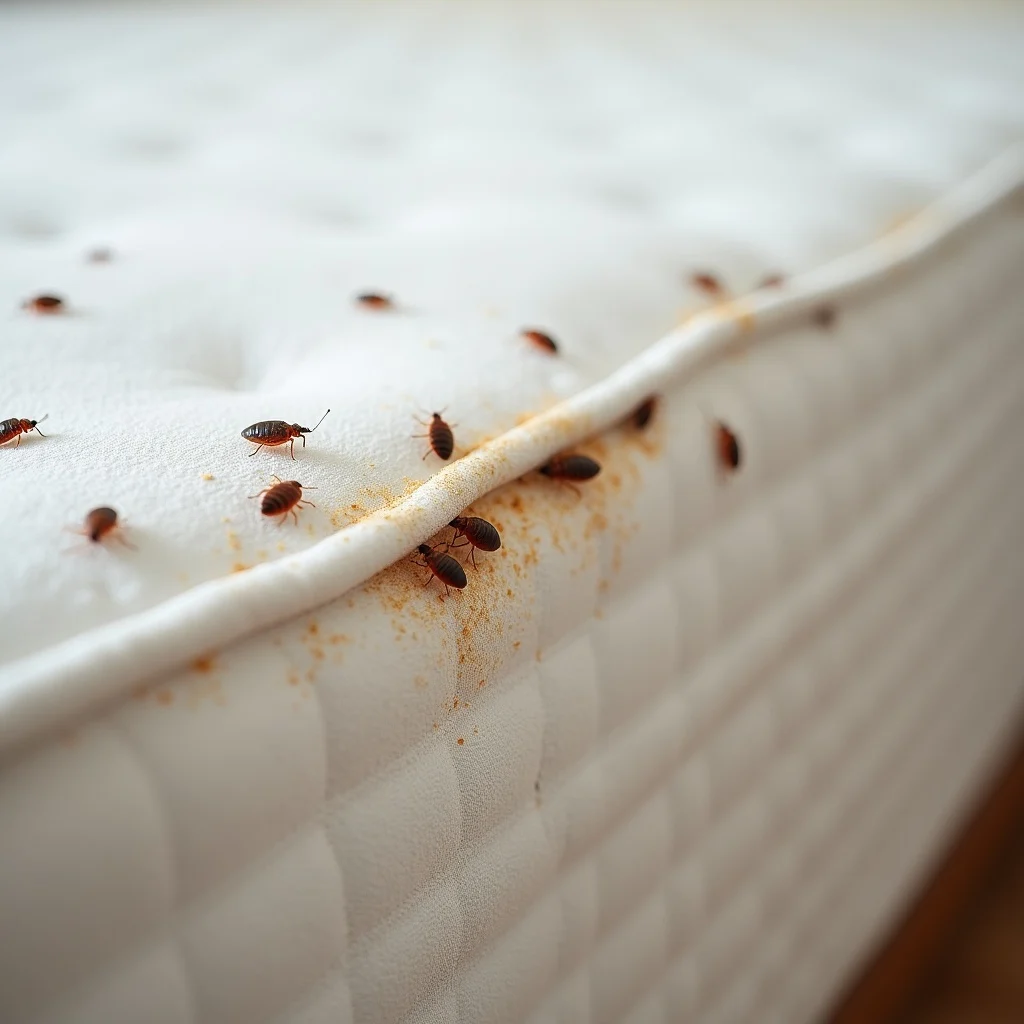
- Check the physical evidence that actually confirms an infestation — live insects, cast skins, dark spotting on the sheet, shed eggs in the seams.
- Do not rely on a scented product as the only action taken before the inspection, because it changes how the room reads without changing what is in it.
- If you are using a repellent, keep it away from children, pets and bedding, and read the label before use rather than assuming it is harmless.
- Get the infestation confirmed before treating, and treat the harbourage rather than the room.
The odour evidence, and how far it goes
The scent a bed bug infestation produces is genuinely useful, provided it is treated as a trigger for a check rather than as a diagnosis.
- It comes from the insects, so it only appears where there are insects. A room that smells musty because of humidity or an empty wardrobe is not the same thing at all.
- It is strongest where the infestation is concentrated, which is usually the mattress area rather than the whole room. That tells you where to look first.
- It is easiest to detect in the morning, in a closed room, after the insects have been active through the night.
- The smell weakens as an infestation is treated, and a room that has aired out is not evidence that the infestation has gone.
- A scent that other people in the house can smell but nobody can explain is worth taking seriously, particularly in a rented property or a room with second-hand furniture.
- It is not reliable in small or early infestations, where there may be too few insects for the scent to register at all.
What each repellent can and cannot do
The honest position on scented deterrents, which is what most of the advice on this topic is missing.
- They may reduce activity briefly. That is a real effect and it is also the reason people conclude the product worked when the activity returned a few days later.
- They do not reach the harbourage. Mattress seams, frame joints and headboard cavities are where the insects and their eggs sit, and no airborne scent reaches into them.
- They have no effect on eggs at all, which matters because eggs are what survive a first treatment and cause the infestation to come back.
- They do not shorten a treatment. If a repellent is used alongside a proper programme it does not change the scope, and it does not replace the follow-up verification visit.
- Vinegar and ammonia-based products are not bed bug treatments. They are general cleaning products that happen to smell strong, and the surface they clean is not where the insects are.
- Mothballs are a recognised hazard in occupied rooms. They are designed to kill by gas in a sealed container, and they are not intended for use around people, pets or bedding.
Risks, and what we would do instead
If you have already been using a scented product, the useful thing is to stop treating it as the treatment and start looking at the evidence.
- Stop relying on odour as a health check. A scented room cannot be assessed by smell, so the physical evidence in the bed seams has to take over.
- Keep any scented product away from children, pets, bedding and food, and follow the label. Most are not intended for prolonged use in an occupied bedroom.
- Do not mix products. Different repellents used together are not more effective, and the combination makes it harder to work out which product is responsible for what.
- Move to the evidence: the seams, the frame joints, the headboard and the gap behind the bed, where live insects, cast skins, spotting and egg cases can actually be found.
- Get the infestation confirmed and then treat the harbourage with registered products applied by licensed applicators, which is what moves the infestation rather than masking it.
- Keep the odour question afterwards as well. A room that still smells musty after the work is done is a reason to ask for another inspection, not a reason to reach for more repellent.
Related articles
Frequently asked questions
What smells do bed bugs actually hate?
The honest answer is that no odour has been shown to clear an established bed bug infestation. Strong scents such as lavender, tea tree oil, peppermint and eucalyptus may reduce activity briefly, but the insects are sitting in mattress seams and frame joints where no airborne scent reaches them, and eggs are unaffected by odour entirely.
Does a strong smell mean I have bed bugs?
It is worth checking, but it is not a diagnosis. The sweet, musty scent of a bed bug infestation comes from the insects, so it points to where to look rather than confirming what you have. The same description is also used for damp, musty wardrobes and poorly ventilated rooms, so the physical evidence in the bed seams is what settles it.
Why does my bedroom smell musty but I cannot find anything?
Several possibilities, and they need separating. It may be genuine bed bug activity that has not reached the seams you checked, or it may be damp, a storage issue, or poor ventilation. It may also be that a scented product has been masking the real scent. Either way, the way to find out is to inspect the mattress seams, headboard and frame joints rather than to keep smelling the room.
Do oil-based repellents kill bed bugs?
No. Repellents discourage or reduce activity; they do not kill. Killing requires an insecticide applied to the harbourage where the insects and their eggs are, and the eggs need a second pass because they survive the first application. That is why a proper programme is built around treatment and a follow-up verification visit.
Is it safe to use mothballs in a bedroom?
No. Mothballs are designed to kill by gas in a sealed container and are a recognised hazard in occupied rooms, particularly where there are children or pets. They are not an appropriate bed bug measure, and they do not reach the harbourage where bed bugs actually are.
Does vinegar get rid of bed bugs?
No. Vinegar is a general cleaning product, and while it is useful for removing faecal spotting from a mattress sheet, it does not kill bed bugs and does not reach the seams or frames where they harbour. Treating a room with vinegar and assuming the infestation has been handled is one of the more common ways a case persists.
Can I use a scented product while I wait for the inspection?
You can use one, but it is worth keeping it away from children, pets and bedding and following the label. More importantly, a scented room cannot be assessed by smell, so the technician relies entirely on the physical evidence in the seams. If you have already used a repellent heavily, mention it at the inspection.
What should I do instead of using smells?
Look for the evidence: live insects, cast skins, dark blood-spotting on the sheet, and shed egg cases along the mattress seams and inside frame joints. Photograph it, keep any specimen sealed, and keep everything in the room so the infestation is not spread to other rooms. Then get it confirmed and treated at the harbourage with registered products applied by licensed applicators.
Need a site-specific answer?
The right solution depends on your property type, infestation pattern, and location. Uni Smart Pest Control can recommend a practical treatment route.