
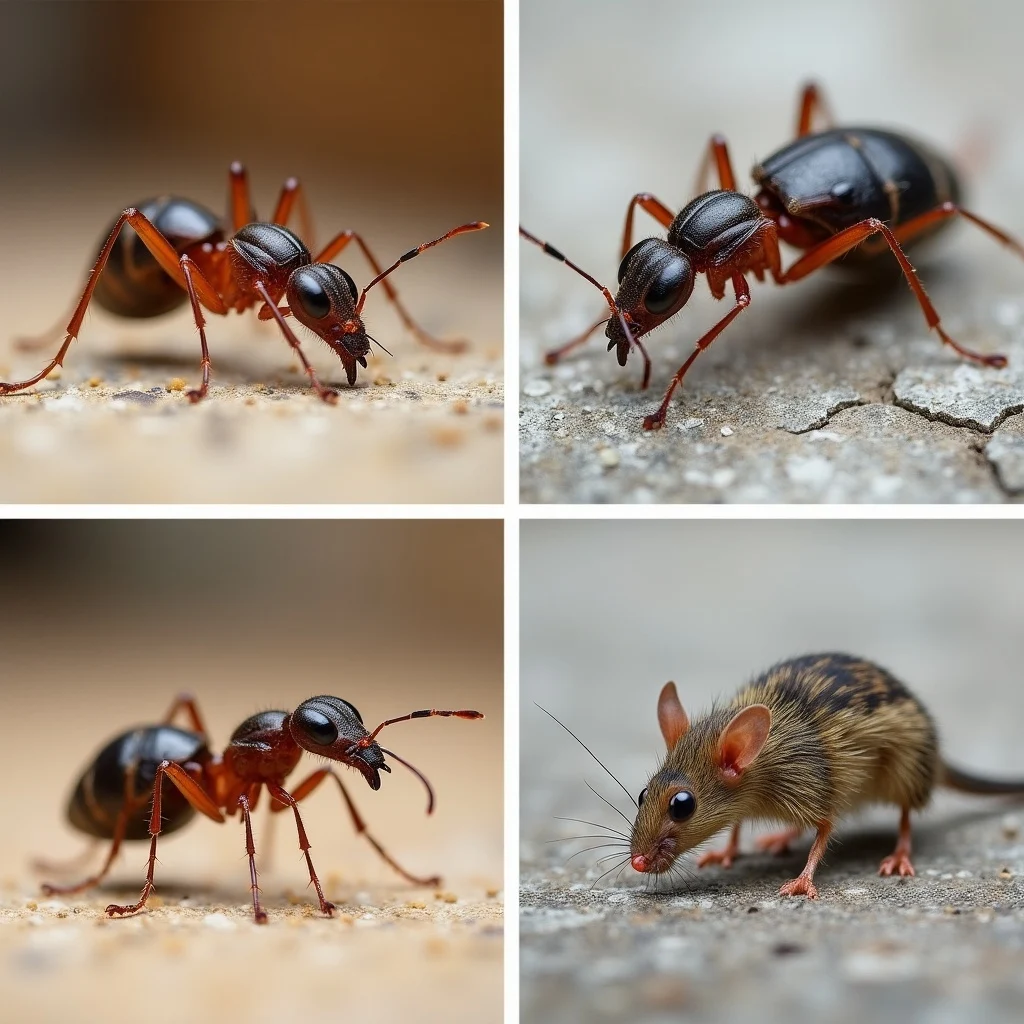
Service Overview
Home pest pressure is usually driven by three things: what comes in (food, timber, second-hand furniture), what stays in (drains, gaps, waste), and where the house sits (next to a food outlet, an active construction site, or a forested edge). A terrace in a new development and a twenty-year-old terrace in the Klang Valley fail in completely different places, and the inspection is what tells the two apart. The useful part of a residential programme is not the spray applied on the day. It is the inspection that shows where the entry points actually are, the schedule that keeps the house covered between visits, and the record that shows whether pressure is falling or moving to the next room.
A household plan also has to work around the household. Children, pets, aquariums, elderly residents, shift work and travel all change how a visit should be scheduled and what has to be moved first. Those factors are settled at the inspection rather than assumed, and they are written into the scope so the technician knows what to expect on arrival.
Apartments and condominiums
Shared structure means shared risk. Infestations often begin in a neighbouring unit or in a shared refuse area, so the stack, the service riser and the refuse point are worth checking, not just the affected unit.
Terrace and landed houses
Perimeter access, soil contact and timber joinery are the usual entry routes. On a terrace, the inspection starts at the yard, the downpipe run and the kitchen rather than at the room where something was seen.
Kitchens, pantries and food storage
Open dry goods, unsealed packets and pet food are the reason most household cockroach and ant activity returns after a single treatment, however good that treatment was.
Gardens, drains and the perimeter
Ants entering through a crack are a symptom of a nest somewhere outside. Draining standing water and closing the perimeter route usually removes more activity than treating indoors does.
What drives the scope and the price
Home pricing follows the property, the pest and the number of zones involved.
- Property type and size — an apartment, a terrace, a double-storey terrace and a bungalow are quoted on different footprints and take different visit times.
- Pest type — ants, cockroaches, rodents and termites are different treatments, and a combined plan is priced as more than one service.
- Number of zones — inside the unit, common areas, refuse areas and the external perimeter are quoted separately.
- Frequency — a single treatment and a quarterly schedule are different scopes, not the same visit sold repeatedly.
- Condition of the property — heavy stored goods, unpainted timber, open drains and gaps around the perimeter all extend the work.
- Strata or landed — in a condominium, parts of the building are the management's responsibility, and the scope reflects who can actually be treated.
Preparing the home before a visit
Preparation is the part homeowners most often skip, and it is the part that decides whether the visit can be completed.
- Move pets, aquarium tanks and children's toys out of the treatment area, and move aquariums out of the room entirely.
- Clear the floor and skirting around the base of walls and cupboards so the technician can reach the edge and the cracks behind them.
- Put food into sealed containers and clear open pantry items, including pet food, for the day of the visit.
- Move bedding, clothing and towels out of cupboards that will be treated so nothing is exposed to product.
- Plan access to the roof void, the void under the bath or sink, and any drain cover that is normally closed.
- Tell the technician about any area that cannot be cleared, and about the days and times when the house is empty.
Products, safety and the household
Safety on a home visit is planned around who actually lives in the house.
- All application is carried out by personnel holding a Pesticide Applicator Licence, supported by technicians holding an Assistant Pesticide Applicator Licence.
- Every product used is registered with the Department of Agriculture under the Pesticides Act 1974, and licences can be checked on the Department's public e-Lesen register.
- Re-entry guidance is given for each room, including how long before people or pets return and what surfaces to wipe.
- Children, pregnant family members, elderly residents and anyone with asthma are told in advance which rooms are treated that day, so the visit can be planned around them.
- Bait stations and gel baits are placed where children and pets cannot reach them, and the technician explains each placement before leaving.
- If the household travels regularly, luggage handling is covered at the visit, because luggage is a common route into a clean home.
Coverage, service limits and what is not covered
The boundaries of a home programme are set out clearly at the inspection.
- Coverage runs across Kuala Lumpur, Selangor and Putrajaya, with teams positioned for scheduled and reactive home visits.
- The scope covers the areas agreed at inspection. Rooms or areas added later are re-scoped and re-quoted.
- Service reports record what was found and done on that visit. They are not a guarantee that no pest will be seen between visits.
- Re-attendance applies where a treated issue persists within the agreed follow-up period. It does not cover issues caused by unresolved structural or environmental factors outside our control, such as an unrepaired water leak attracting ants from outside.
- Building and drainage repairs are outside treatment scope and are flagged in the report for the owner to action.
- The company is a member of PCAM and works within Malaysian regulatory requirements.
How this service works
- Inspect the property: where the signs are, where they are coming from, and what is drawing them in.
- Set the scope: which rooms and which external areas are covered, and how often.
- Treat the active points and the entry routes, not only the room where a pest was seen.
- Record what was found and done, and what has to change in the house.
- Return on the agreed schedule and compare the record against the previous visit.
Related pages
The links below take you straight to the material most relevant to this page.
Frequently asked questions
How often should a home in Malaysia be treated?
Many homes settle on a quarterly cycle, and higher-pressure homes — near food outlets, construction sites or forested edges — often need monthly or bi-monthly visits. The right cadence comes out of the first inspection and the records that follow, rather than a fixed schedule applied to every house.
Should I treat the whole house, or only the room where I saw pests?
Only the room where a pest was seen. The pest is rarely introduced there; it arrives from somewhere else in the structure — an outdoor nest, a drain, a gap in the perimeter, or an adjoining unit in a condominium. Treating the whole route is what stops it coming back.
Can one visit be enough for ants?
Sometimes, if the nest is outside and the entry route is closed. If ants are coming in from a neighbouring unit, a shared refuse area or a crack in the slab, the first visit reduces the trail but the source still has to be found, so a follow-up is normally needed to confirm it has stopped.
Is it safe to treat a home with children and pets?
Products are applied by licensed applicators, every product used is registered with the Department of Agriculture, and re-entry guidance is given for each room. Tell the technician in advance about young children, elderly residents, anyone with asthma and any aquarium, so the visit is planned around them.
Do I need a termite plan as well as general pest control?
They are separate services and are quoted separately. General pest control covers ants, cockroaches, rodents and similar activity; termite work is a different treatment with its own scope, and on a landed house its own inspection of the perimeter, subfloor and foundation line.
My condominium has cockroaches coming from the unit above. What can be done?
The unit above, the refuse area and the shared service runs need to be checked first, because the trail usually runs along shared services. In a condominium some parts of the building are the management's responsibility, so the scope reflects what can be treated from your unit and what has to be raised with management.
Do you provide a written record after each visit?
Yes — a written service report after every visit covering what was found, what was applied, and what to change in the home. Those records are what the schedule is adjusted from, and they are useful if the same problem keeps coming back.
What is not covered by a home pest control visit?
Structural problems. Cracks in the slab, a leaking pipe, a broken drain cover or a roof void left open are outside treatment scope. The technician flags them in the report, but fixing them is a builder's or plumber's job.
Sources
- Pesticides Act 1974 and pest control licences — Pesticides Board Malaysia (Department of Agriculture)
- Public e-Lesen register for pest control operator, applicator and assistant applicator licences — Department of Agriculture
- Street, Drainage and Building Act 1974 (Act 133) and Uniform Building By-Laws 1984 — Ministry of Housing and Local Government
- Pest Control Association of Malaysia (PCAM)
About the business
Uni Smart Pest Control is a Malaysian-registered pest control company operating since 2002. The technical content on this page is written and reviewed by the company itself, not by an individual.
- Author
- Uni Smart Pest Control Sdn. Bhd.
- Technical reviewer
- Uni Smart Pest Control Sdn. Bhd.
- SSM registration
- 202001020657 (1376977-D) Incorporated 2 January 2020
- Service coverage
- Kuala Lumpur, Selangor and Putrajaya
Credentials: PAL — Licensed Pesticide Applicator · APAL — Assistant Pesticide Applicator · PCAM member
Last reviewed: 10 November 2026
Next step
Tell us your property type and pest issue. We will recommend the most suitable treatment route and timeline.