
What to know
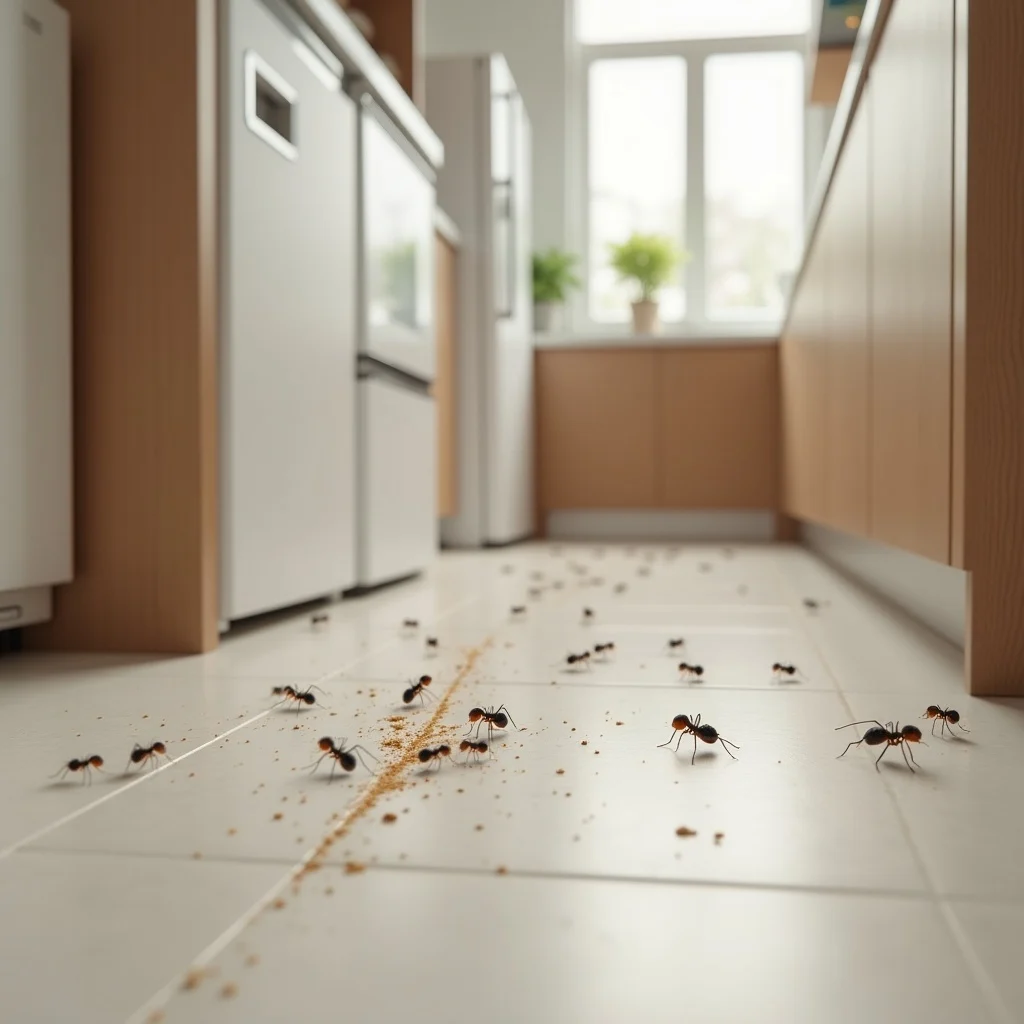
Ant infestations in Malaysian homes are frustratingly common and rarely solved by spraying the visible ant trail. Because ants live in colonies with established foraging routes, killing visible workers without treating the colony and its entry points typically results in the trail reappearing within days, often through a different gap.
The most common ant species in Malaysian homes are ghost ants (light-colored, trailing in kitchens), carpenter ants (larger, nesting in damp wood), and odorous house ants (producing a coconut-like smell when crushed). Correct species identification determines whether treatment focuses on interior foraging routes, exterior perimeter, or structural timber.
Species identification
Different ant species require different treatment approaches. Ghost ants, carpenter ants, and odorous house ants each have distinct nesting behaviors and foraging patterns that determine where we apply treatment.
Foraging route mapping
We observe active ant trails to trace the entry point and identify the primary foraging path from nest to food source — both are required for effective treatment.
Bait station placement
For persistent ant problems, we use bait stations placed along confirmed foraging routes. Worker ants carry the bait back to the colony, allowing the treatment to reach the queen and suppress reproduction.
Perimeter and entry-point treatment
We apply residual insecticide around window frames, door thresholds, utility entry points, and exterior wall junctions to create a barrier that prevents ants from re-entering the property.
Food-source management
We provide a specific checklist for each property type — kitchen hygiene for homes, storage protocols for commercial kitchens — that addresses the conditions attracting ants between professional treatments.
Carpenter ant timber inspection
For carpenter ant concerns in KL terrace and bungalow properties, we include a timber condition assessment as part of the inspection, checking for moisture damage and hollow-sounding structural elements.
Practical action plan
- Observe active ant trails to identify entry point, primary foraging path, and likely nesting location.
- Apply targeted insecticide treatment along the foraging route and at the entry gap or crack.
- Install bait stations at strategic points along the trail for colony-level suppression.
- Treat the exterior perimeter around the property to prevent re-entry through adjacent structural gaps.
- Provide a written hygiene and property maintenance checklist tailored to the ant species and property type.
- Schedule a follow-up visit to confirm trail elimination and retreat any secondary entry points that emerge.
Related pages
Use these links to move from answers to service options, local coverage, and pricing details.
Related articles
Frequently asked questions
Why do ants keep coming back after I kill them?
Ants live in colonies with a reproductive queen and worker foraging system. Spraying visible workers kills only those individuals — the colony continues producing more. Effective ant control requires either eliminating the queen (through bait that workers carry back) or blocking every entry point the colony uses to access your property.
What type of ants are most common in Malaysian homes?
Ghost ants — small, pale-colored ants with a dark head — are the most common interior nuisance ant in Malaysian homes, particularly in kitchens and bathrooms. Carpenter ants are larger and nest in damp timber, which can cause structural damage if left untreated. Odorous house ants produce a distinctive coconut smell when crushed.
Are ants dangerous to have in my home?
Most household ants in Malaysia are a nuisance rather than a health hazard, but they can contaminate food surfaces by walking over waste and then onto food preparation areas. Carpenter ants are the exception — they hollow out structural timber for nesting, which can compromise the integrity of damp or damaged wood over time.
How much does professional ant control cost in Malaysia?
Professional ant control in Malaysia typically starts from RM 200 for a standard residential unit, with pricing based on property size, ant species, and whether carpenter ant timber inspection is required. Commercial kitchen ant programs are quoted based on facility size and service frequency.
What can I do to prevent ants between professional treatments?
Store all food in sealed containers (especially sweet foods and pet kibble), fix leaking taps or pipes that create moisture trails, wipe down kitchen surfaces and floors regularly, remove pet food bowls after use or clean around them daily, and seal small gaps around window frames and door frames with silicone sealant.
Will ant spray from the hardware store fix my ant problem?
Surface spray provides immediate knockdown of workers it contacts, which can make the problem appear solved for a few days. However, it rarely reaches the colony and does not prevent new ants from re-entering through the dozens of other tiny gaps around a typical home. For recurring ant problems, professional bait-based treatment with a follow-up visit is significantly more effective.
Need a site-specific answer?
The right solution depends on your property type, infestation pattern, and location. Uni Smart Pest Control can recommend a practical treatment route.