
What we handle
Reduce rodent pressure with system-level baiting and exclusion
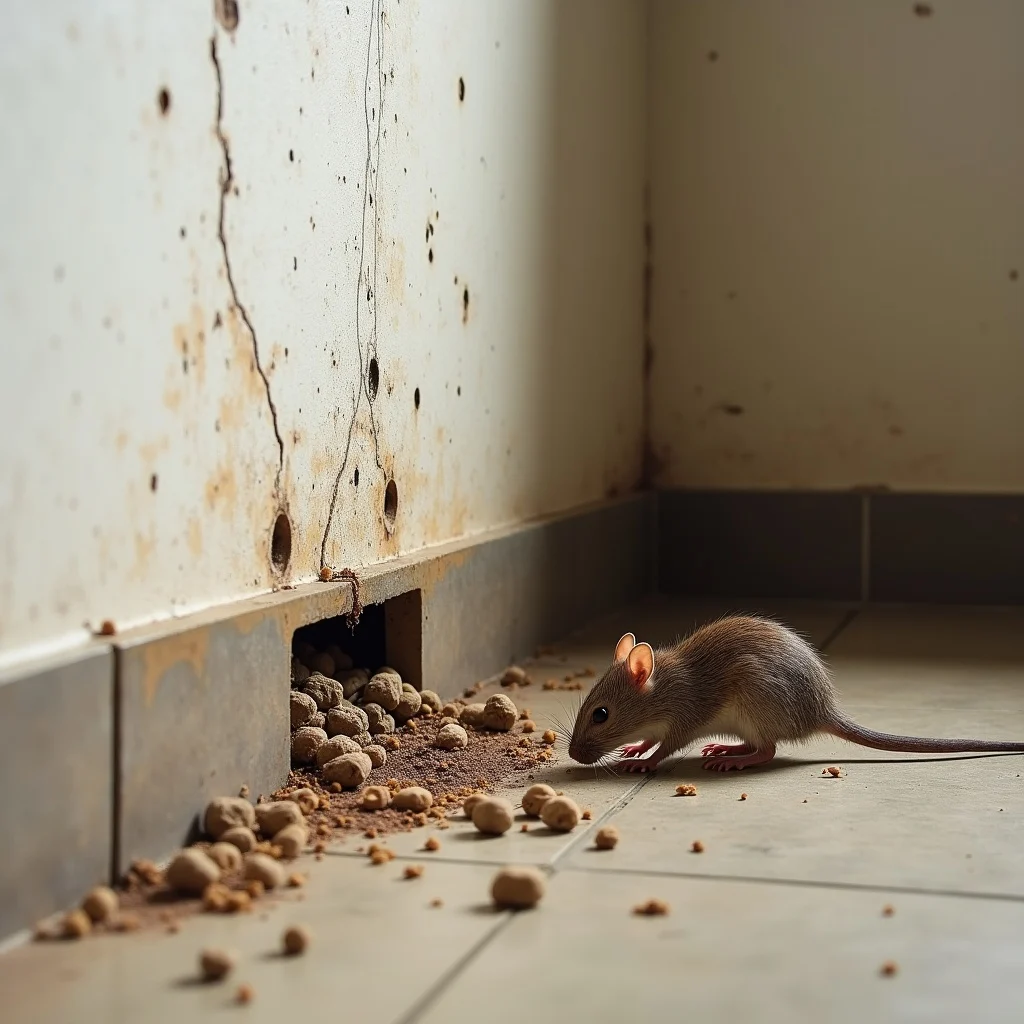
Rodent activity in Malaysian properties follows food, shelter, and movement routes. Mice and rats do not appear randomly. They enter through gaps in walls, doors, drainage, and ceiling voids, follow the same paths nightly, and nest in undisturbed areas like roof spaces, under kitchen cabinets, in storage rooms, or behind appliances. Successful control means breaking the route, removing the food source, and treating the harbourage. At Uni Smart Pest Control, we design the rodent program around these three factors plus the species involved. Most Klang Valley rodent issues involve roof rats, which are excellent climbers that travel through ceiling voids, or house mice, which are smaller and stay closer to ground-level harbourage. Each needs a different approach, and our program covers both detection, treatment, and exclusion. We work with homeowners, restaurants, warehouses, and office buildings across Kuala Lumpur, Selangor, and Putrajaya.
Smart Bait Eco Box
Tamper-resistant station approach for safer deployment in active environments.
Ground and ceiling control
Integrated placement strategy for both visible and concealed rodent pathways.
Monitoring cadence
Routine checks track bait take, hotspot changes, and control progress.
Commercial suitability
Suitable for restaurants, offices, warehouses, and mixed-use properties.
Tikus di Malaysia: how a rodent problem starts
Tikus is the word most people in Malaysia use for any rodent in the house, and in practice it covers rats, mice and the occasional bandicoot that has found a way in. Whichever it is, the pattern of entry is the same: an opening, a food source, and a warm sheltered space between them. Because rodents repeat the same route nightly, a household that sees activity in the kitchen will usually see it in the kitchen again the following night. That predictability is what makes the problem solvable, and it is also why spraying the visible route rarely works on its own.
- The first sighting is rarely the first entry — the route was established before you noticed
- Noise inside walls or ceilings at night usually means travel through a void, not a room
- Droppings appear before sightings, so early cases are usually confirmed by evidence
- Food left accessible outdoors draws rodents to the building rather than away from it
- In warm months roof rats move through upper voids, where most people do not look
Jenis tikus: the rodent species found in Malaysian properties
Four types account for almost all of the rodent work we do across Kuala Lumpur, Selangor and Putrajaya. They differ in size, climbing ability, preferred nesting height and how they respond to bait, which is why species identification comes before any station is placed. Getting the identification wrong is the most common reason a rodent programme underperforms. A ceiling-level species treated with ground-level bait will keep coming back until the placement matches the behaviour.
- Roof rat, also called black rat — a strong climber that works through ceiling voids, false ceilings and roof spaces
- House mouse — smaller, ground-level, and content to live behind appliances and inside cupboards
- Norway rat — larger, less common in the Klang Valley, and usually found near drains, restaurants and food waste areas
- Bamboo rat — burrowing rather than climbing, working below ground level near gardens and retaining walls
Tikus rumah, roof rat and house mouse: telling them apart
Tikus rumah is the general term for the rats and mice that live in and around a home, and telling them apart does not need a laboratory. Size, droppings, gnaw marks and where the activity appears each narrow it down quickly. The practical question is not what to call it. It is whether it travels high or low, because that decides where the stations go and which entry points matter.
- Droppings identify the size: a house mouse leaves grains a few millimetres long, a roof rat leaves pointed droppings, and a Norway rat leaves blunt ones
- Gnaw marks on cabling, packaging and timber indicate gnawing rather than simple scratching
- Activity overhead — in the ceiling, above the switch plate, in the roof space — points to a roof rat
- Activity at floor level, behind the fridge and under the sink, points to a house mouse
- Burrows and damaged garden edges point to a burrowing species rather than a climbing one
Pest control for rats: what our rodent programme covers
Pest control for rats covers the whole chain, from the first confirmation to the point where nothing comes back. It is designed for homes, apartments, restaurants, offices and warehouses, and it adapts the placement strategy and the monitoring cadence to the property type. For most sites the programme has three parts: stations placed on confirmed routes, checks that read what the stations are telling us, and exclusion work that closes the openings the rodents were using.
- Route mapping from evidence, so stations go where the animals actually travel
- Secured bait stations placed along those routes, including ceiling-level and ground-level positions
- Scheduled checks that record bait take, hotspot movement and the progress of the control
- Entry-point identification and sealing to stop the next colony arriving
- A written service record for commercial sites that face audits
Rodent control in Malaysia: routes, food and shelter
Rodent control works on three conditions, and removing any one of them makes the site unsuitable for them. Food has to be sealed, water has to be absent, and shelter has to be unavailable. The Malaysian climate works against the property owner on all three. Rain pushes rodents into upper floors and out of external ground nests. Heat pushes them to seek cool voids. And food waste handling in dense commercial areas keeps a supply line open that no amount of bait will close on its own.
- Food — sealed storage, covered bins and taking waste out before it attracts overnight visitors
- Water — fixed leaks, clear drip lines under air-conditioning units and empty standing water
- Shelter — clearing stored material, cardboard and clutter from voids, yards and unused rooms
- Access — keeping doors closed, gaps sealed and waste areas inaccessible to rodents
- Neighbours — checking adjoining units, shops and shared service areas where rodents commonly travel
Signs of a rodent problem
Rodents are cautious and hide well, so the evidence they leave is usually more reliable than a sighting. In practice a confirmed case is normally established from droppings, noise and gnaw marks rather than from seeing a live animal. The timing of the signs matters too. Fresh droppings mean active harbourage nearby. Old, dry droppings with no new ones alongside often mean the problem has already moved on, which is worth knowing before you spend on the wrong treatment.
- Droppings clustered along walls, under sinks and behind appliances
- Gnaw marks on food packaging, cabling, skirting and timber
- Scratching and running sounds inside walls or ceiling voids, usually after dark
- A musky or ammonia smell in enclosed spaces such as cupboards and risers
- Rubber marks along baseboards and pipes where animals run repeatedly
Baiting and monitoring: how the treatment works
Baiting works because a station placed on a confirmed route is taken by an animal that then carries the bait back to others. That is why placement, not the amount of bait, is the part that decides whether it works. Monitoring is the second half. Each check records what has been taken, which stations are being visited and where activity has moved to, and that record is what tells us whether the treatment is working or whether the route needs to be broken somewhere else.
- Stations are secured in place and positioned beyond the reach of children and pets
- Ground-level and overhead stations are both used, because the species decides the height
- Checks record bait take and hotspot movement rather than simply confirming a visit
- Station numbers are adjusted as activity shifts, instead of staying fixed for the whole contract
- The monitoring record shows whether the route is broken or whether more work is needed
Exclusion: sealing the routes that keep bringing them back
Exclusion is the part of rodent control that lasts, and it is the part most often left out of a one-off treatment. A station programme with no sealing behind it is buying time rather than solving the problem. The openings are mostly small and mostly obvious once someone looks for them with the intention of finding them: a gap under a door, a drain without a cover, a pipe penetration left open, a soffit panel that has moved.
- Gaps under doors — mice pass through a gap of about 6mm, and rats through about 12mm
- Unprotected drain and waste pipe openings
- Gaps around utility pipe penetrations and service conduits
- Damaged roof tiles, soffits and fascia panels that open a route into the ceiling void
- Building settlement cracks and gaps where an extension meets the original structure
Rodent control pricing in Malaysia
Rodent control starts from RM 350 for an apartment using secured Smart Bait stations. Terrace houses start from RM 450. Bungalows and commercial properties are quoted individually, because the building size, the number of routes and the station count needed to cover them vary too much for a single figure to be honest. Annual contracts with multiple visits are priced below the equivalent one-off rate. For a site with continuing pressure that is usually the cheaper option over a year, not only the safer one.
- Apartment and unit pricing starts from RM 350 with secured Smart Bait stations
- Terrace houses start from RM 450
- Bungalows, shoplots and commercial properties are quoted against building size and route complexity
- Restaurant and food-grade sites usually need monthly or bi-monthly visits
- Warehouses and factories generally run on quarterly or bi-annual schedules with a higher station count
Related rodent and pest control pages
These pages cover the practical detail behind the rodent programme and the wider pest control services that usually run alongside it.
Pricing Guide
Rodent control scope and pricing depend on property type, route complexity, and monitoring frequency. Entry-level plans are available for selected sites.
View full price guideExplore this cluster
-
Smart Bait Eco Box system
How our tamper-resistant bait stations break the rodent cycle.
-
Rodent control for residential
Smart Bait, sealing, and route mapping for homes and apartments.
-
Rodent control for commercial
Restaurant, warehouse, and retail rodent control with documentation.
-
Rodent control cost guide
What affects the price and starting rates for each property type.
-
How fast does Smart Bait work?
Timeline for bait consumption and full colony clearance.
-
How to get rid of rodents permanently
Long-term prevention and exclusion after treatment.
-
Rodent prevention guide
Sealing entry points and food storage best practices.
-
Pest control price guide Malaysia 2026
Compare rodent rates with other pest services.
Author: Uni Smart Pest Control Sdn. Bhd. · Technical reviewer: Uni Smart Pest Control Sdn. Bhd. · Credentials: PAL Licensed Applicator · APAL Certified Technicians · PCAM Member · SSM registration 202001020657 (1376977-D) · Updated: October 2026 · Last reviewed: 10 November 2026
How we control rats and mice in KL, Selangor and Putrajaya
Rodent pressure varies by property type. Shoplots in Klang face different challenges from condominiums in Mont Kiara. We map routes before placing any control device.
-
Burrow surveys around the perimeter
Rats often nest under pavers, drains and overgrown landscaping. We start by identifying active burrows and rubbish accumulation points.
-
Grease marks and runways
Dark smudges along walls and pipes show high-traffic routes. Placing control devices along these runways is far more effective than random corner baiting.
-
Entry points above ground level
In commercial kitchens and ceiling voids, roof gaps, false ceilings and utility penetrations are common entry routes. We inspect vertically, not just at floor level.
-
Smart bait placement
Secured bait stations are positioned along confirmed runways. We avoid open bait that could put non-target animals or children at risk.
Illustrative example
Illustrative example: restaurant rodent control in Puchong
- Property
- Restaurant with back-lane access, Puchong
- Area
- Puchong, Selangor
- Found
- Rats entering through a drainage gap; grease marks along the back wall and chewed packaging in storage
- Treatment
- Sealed entry points and installed secured smart bait boxes along confirmed runways
- Typical outcome
- Typical result: catch rates fall within two weeks, after which a monthly monitoring schedule is set.
- Example prepared
- November 2026
This is an illustrative example, not a record of a specific client job. The steps and the typical result shown are representative of the treatment described; actual outcomes vary with property type, pest pressure, and how well the site is prepared.
About the business
Uni Smart Pest Control is a Malaysian-registered pest control company operating since 2002. The technical content on this page is written and reviewed by the company itself, not by an individual.
- Author
- Uni Smart Pest Control Sdn. Bhd.
- Technical reviewer
- Uni Smart Pest Control Sdn. Bhd.
- SSM registration
- 202001020657 (1376977-D) Incorporated 2 January 2020
- Service coverage
- Kuala Lumpur, Selangor and Putrajaya
Credentials: PAL — Licensed Pesticide Applicator · APAL — Assistant Pesticide Applicator · PCAM member
Last reviewed: 10 November 2026
Frequently asked questions
How do I know if I have a rodent problem?
Common signs include droppings (small dark pellets, often along walls or under sinks), gnaw marks on food packaging, cables, or wood, scratching sounds in walls or ceiling voids at night, a musky or ammonia smell in enclosed spaces, and sightings of live or dead rodents. The most reliable early sign is droppings, which appear before sightings.
What kind of rodents are common in Malaysian homes?
The most common are roof rats (also called black rats) which are excellent climbers and travel through ceiling voids, false ceilings, and roof spaces, and house mice which are smaller and nest at ground level. Norway rats are less common in Klang Valley but occur near restaurants, drains, and food waste areas. Identifying the species matters because each has different behaviour and treatment needs.
How much does rodent control cost in Malaysia?
Rodent control starts from RM 350 for an apartment using Smart Bait Eco Box. Terrace houses start from RM 450. Bungalows and commercial properties are quoted individually based on building size, route complexity, and the bait station count needed. Annual bi-annual contracts with multiple visits are priced 20 to 30 percent lower per visit than one-off rates. See the price guide for current rates.
How do rodents get into Malaysian homes?
Common entry points include gaps under doors (mice can fit through a 6mm gap, rats through a 12mm gap), unprotected drain openings, gaps around pipe penetrations, damaged roof tiles or soffits, ceiling void access from common areas in high-rise buildings, and gaps in the building envelope from settlement or construction. Our inspection identifies which entry points are active.
Is rodent bait safe for children and pets?
Smart Bait Eco Box stations used by Uni Smart Pest Control are tamper-resistant and secured in place. The bait inside is contained, and the stations are positioned out of reach of children and pets. Pets that may try to access stations (typically large dogs) are factored into station placement. We provide re-entry and safety guidance after each visit.
How long does rodent control take to work?
Initial results (reduced activity) typically appear within 1 to 2 weeks as rodents consume the bait. Full clearance of an established colony takes 4 to 8 weeks. The monitoring phase that follows shows whether the route is broken or whether additional treatment or exclusion work is needed. Recurring service contracts include this monitoring on a quarterly or bi-annual basis.
What can I do to prevent rodents from coming back?
Seal entry points larger than 6mm (gap under doors, around pipes, drain openings). Store food in sealed containers. Clear clutter from storage areas and roof spaces. Trim vegetation away from the building exterior. Manage waste properly with sealed bins. After treatment, our team can identify and seal the active entry points during the same visit for a small additional cost.
Do you handle rodent control for restaurants and warehouses?
Yes. Restaurants and food-grade facilities need monthly or bi-monthly service with documented service reports for health and safety audits. Warehouses and factories typically use bi-annual or quarterly service with a higher bait station count. We can set up a recurring contract that meets your operational requirements and audit documentation needs.