Service Overview
Four methods carry most of the work: inspection and harbourage mapping, targeted chemical application to the harbourage, heat treatment for larger or more stubborn infestations, and physical exclusion with encasements and sealing. Most cases need more than one of them, and the mix is decided from the inspection rather than from the name of the pest. The method matters less than whether the harbourage was found. Every technique below works on the insects it actually reaches and does nothing at all for the ones it misses, which is why mapping comes first and verification comes last.
The order of the work is also fixed for a reason. Treating before mapping wastes product and misses the insects that were never in the treated area; treating without verifying leaves the eggs behind. Each stage is there to make the next one work.
Inspection and harbourage mapping
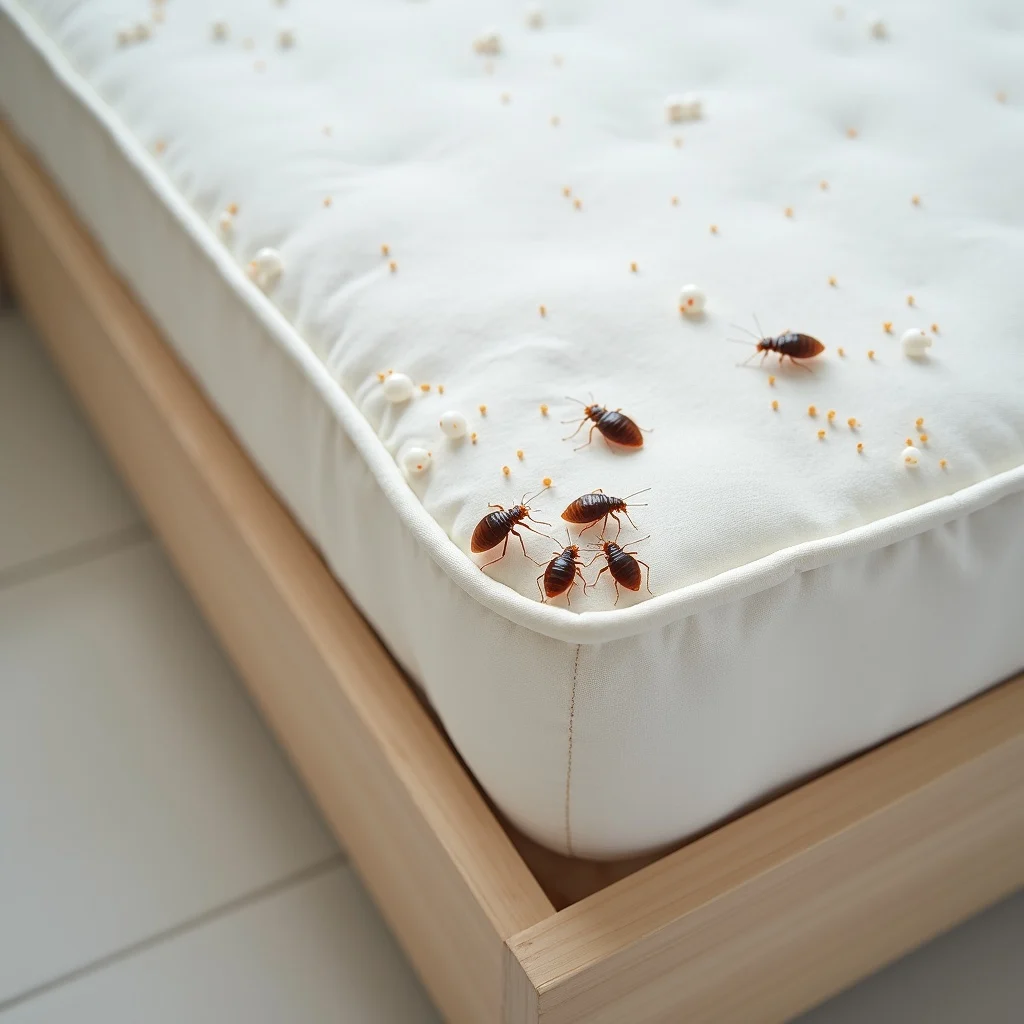
Marking where the insects actually are — mattress seams, frame joints, headboards, skirting gaps, luggage and second-hand furniture — so every later method is aimed at a confirmed location.
Targeted chemical application
Insecticidal application into the seams, joints and harbourage where the insects and their eggs are, rather than a general spray spread across the room.
Heat treatment
Raising the temperature of the room and its contents above the level that kills eggs and every life stage. Used where the infestation is widespread, deeply harboured, or has resisted earlier chemical work.
Physical exclusion
Encasements that trap any insect inside the mattress or frame so it cannot feed and cannot leave, plus sealing of the gaps and cracks that let new ones in.
How the method is chosen
The mix follows the findings, not a standard package.
- Where the insects are — the treatment follows the harbourage. A single affected mattress and a bed frame built into a fitted wardrobe are different problems with different mixes.
- Which life stage is present — eggs and egg cases are the reason most cases need more than one visit. A method that kills adults and nymphs but leaves eggs standing has not finished the job.
- How widespread the activity is — one room is a targeted chemical and exclusion job, while several rooms or a shared wall usually justifies heat work across the affected area.
- What has already been tried — repeated over-the-counter spraying can scatter an infestation into more rooms and complicate the mapping, which changes the protocol.
- What the household can do — the method mix is only workable if bedding, furniture and luggage can be moved and the rooms can be left as they need to be for the duration of the work.
- What the building allows — in a condominium, treating an adjacent unit or a shared service riser changes what is possible from inside one unit.
What each method does, and what it does not do
Each technique has a clear job and a clear limit, and knowing the limit is what stops a partial result being read as a finished one.
- Chemical application reaches the harbourage it is directed at. It does not reach an insect sitting in a seam that was never treated, and it does not kill every egg case on the first pass.
- Heat treatment raises the temperature of the room and everything in it. It is effective across the treated space, but it works only on the space that is actually heated, and the property has to be prepared for it.
- Encasements do not kill anything. They trap insects inside the mattress or frame so they cannot feed, and they stop new insects from hiding in the seams in the first place.
- Exclusion and sealing block entry points and close the travel routes between rooms. They do not remove an existing infestation.
- No single method covers everything, which is why a full programme normally combines two or more and finishes with a verification visit.
- Prevention — encasements, hot washing and luggage discipline — is what stops a treated property being re-infested from outside.
Preparing the property for each method
Each method has its own preparation requirement, and they are not interchangeable.
- For chemical work: clear access to the bed frame, headboard and skirting, and remove bedding and clothing from the room.
- For heat work: the room has to be cleared of items that cannot tolerate heat, and the space stays sealed for the duration, so the household plans for those rooms to be out of use.
- For encasements: the mattress and the base of the bed frame are wrapped and left sealed long enough for any trapped insect to die, and they stay on through the monitoring period afterwards.
- For all methods: nothing is moved from an affected room into an unaffected one, and luggage stays away from sleeping areas until the inspection is done.
- Tell the technician about anyone who travels for work, and about rooms that cannot be cleared, so the plan can be sequenced around them.
- People with bites should avoid scratching, because broken skin carries a secondary infection risk and it makes the skin evidence much harder to read while the case is being mapped.
Coverage, service limits and what treatment does not include
The scope covers the methods chosen for the case, and the boundaries are stated before the first visit.
- Coverage runs across Kuala Lumpur, Selangor and Putrajaya, with teams positioned for bed bug work including heat treatment.
- The scope covers the rooms confirmed at inspection. Rooms added later are quoted before further work starts.
- No treatment carries a fixed completion date. Visible activity usually falls within days, and control is confirmed only once follow-up inspections show the property is clear.
- Re-attendance applies where a treated issue persists within the agreed follow-up period, and the method mix is reviewed at that point rather than simply repeated. Reinfestation introduced after treatment from luggage, clothing or second-hand furniture is a separate case with a separate scope.
- Furniture replacement and building-level work sit outside treatment scope. A heavily infested mattress that cannot be treated in place, or an infestation in a neighbouring unit in a condominium, has to be handled separately.
- Every product used is registered with the Department of Agriculture under the Pesticides Act 1974, which is part of why the method chosen for a case has to be one that can be delivered with approved products and licensed applicators.
How this service works
- Map the infestation: identify the live harbourage and the spread points, room by room.
- Choose the method mix: which of chemical, heat and exclusion are needed, and in which rooms.
- Apply the protocol: targeted treatment, heat work or exclusion applied to the mapped areas in the right order.
- Verify with a follow-up: check the mapped rooms again for live activity and fresh signs.
- Set the prevention step: encasements, luggage handling and the household habits that stop a new introduction.
Related pages
The links below take you straight to the material most relevant to this page.
Frequently asked questions
What actually kills bed bugs permanently?
Sustained control comes from treating the whole life cycle, including the eggs, and confirming it with a follow-up inspection — not from a single spot spray. The methods differ by case, but they all depend on the harbourage being found first, because a technique only works on the insects it actually reaches.
Is heat treatment better than chemical treatment?
Neither is better in general; they suit different situations. Heat works well where the infestation is widespread and deeply harboured, or has resisted earlier chemical work. Targeted chemical application is usually the right choice for a confirmed, limited infestation. The inspection decides which mix is used.
How long until bed bugs are gone after treatment?
There is no fixed completion date. Visible activity usually starts to drop within days of the first treatment, and eggs can survive the first application and hatch over the following one to two weeks. Full control depends on the inspection findings, the number of affected rooms, the life stage of the infestation, how well the property was prepared, and the scheduled follow-up visits — and it is confirmed only once the property is clear.
Can I sleep in the room after treatment?
It depends on the method used, and you get clear re-entry guidance after each visit. Chemical work needs the room left unoccupied for a period before it is used again, and heat work needs the space sealed while it is treated. The technician confirms the re-entry timing before leaving rather than after you ask.
Do encasements kill bed bugs?
No. Encasements trap any insect inside the mattress or bed frame so it cannot feed and cannot leave, and they stop new insects hiding in the seams in the first place. They are part of the prevention step and they work alongside treatment, not instead of it.
Will one spray treatment be enough?
Usually not. Egg cases survive a first application, and a single visit rarely reaches every harbourage in the room. Most programmes are built around an initial treatment plus a follow-up verification visit, and the scope is quoted that way from the start.
Do you treat mattresses, sofas and other furniture?
Where the item can be treated in place and the material accepts it, yes — targeted application to the seams, joints and frame. Where it cannot be treated in place, the recommendation is stated plainly, and any replacement is the client's decision rather than something included in the treatment.
Can bed bugs spread to other rooms during treatment?
They travel on luggage, clothing and bedding, which is why nothing is moved from an affected room into a clean one and luggage is kept away from sleeping areas. Rooms sharing a wall or a service run with an affected room are usually mapped in the same visit, so spread is caught rather than treated afterwards.
Sources
Next step
Tell us your property type and pest issue. We will recommend the most suitable treatment route and timeline.