
What we handle
Control colony pressure before structural damage escalates
Termite problems are rarely solved with surface sprays. We use system-based treatment that targets colony behaviour and long-term barriers.
Baiting systems
Station-based approach designed to eliminate colony activity at source.
Soil treatment
Chemical barrier strategy for pre- and post-construction risk control.
Technical diagnosis
We confirm species pattern, entry points, and spread before method selection.
Structured reporting
Documentation supports property owners, managers, and compliance teams.
Termite control Malaysia: baiting and soil treatment
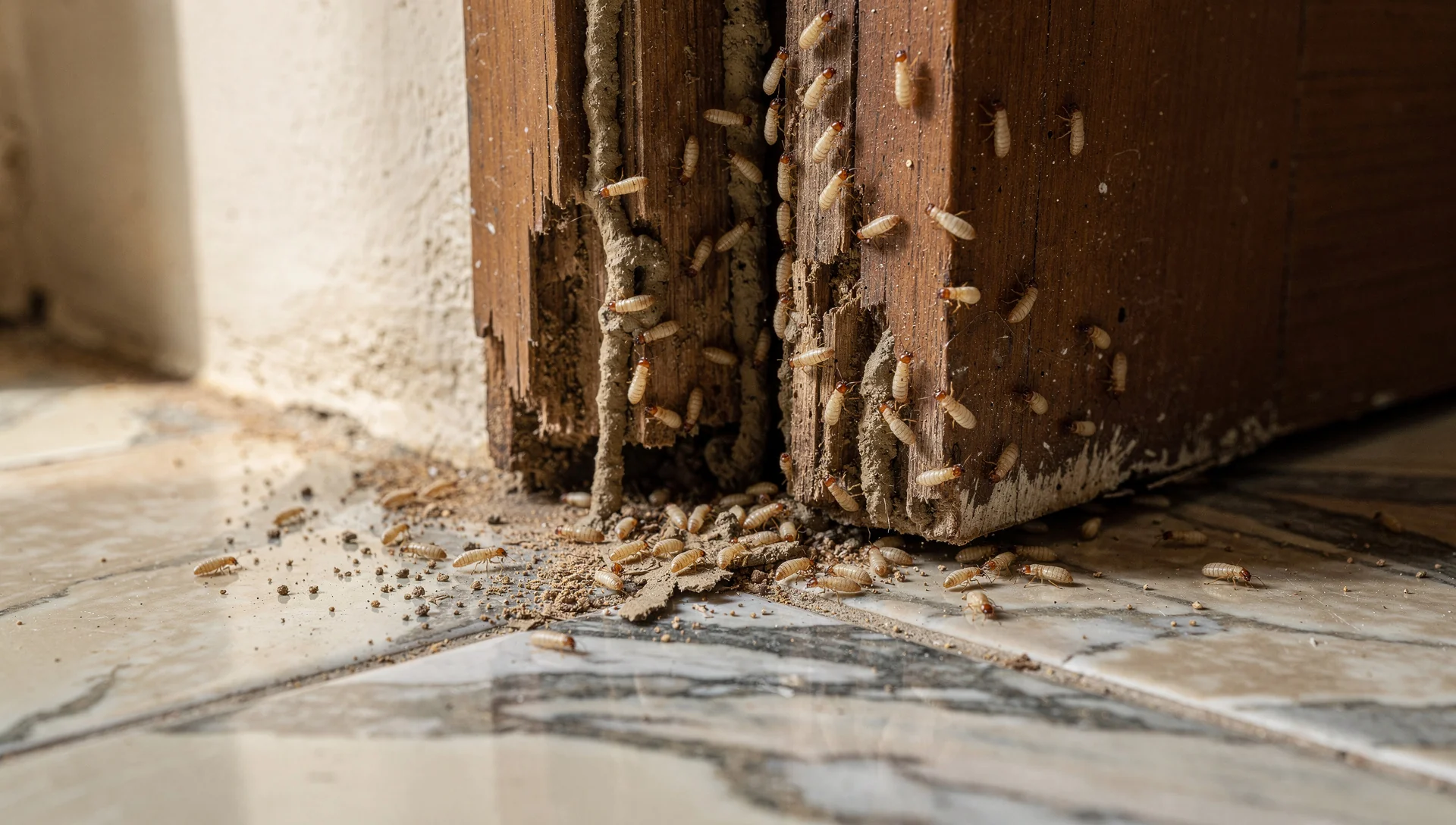
Termite control in Malaysia is not a spraying job. Termites feed on timber through the soil line and the concealed voids behind finishes, and by the time an infestation is visible in the living space it has usually been working inside the structure for some time. Two methods carry most of the work. Baiting systems target the colony itself by intercepting the workers as they travel through the soil. Soil treatment creates a treated barrier around the structure that prevents entry. Which one is right depends on what the inspection finds, and the two are often used together on the same property.
- Baiting systems intercept foraging workers and carry the treatment back to the colony
- Soil treatment creates a barrier around the structure to stop new entries
- Termite pre-construction treatment protects the building before it is covered
- Termite post-construction treatment deals with colonies already inside the structure
- Diagnosis comes first, because the method depends on the species and the entry points
Jenis lipas: the termite species found in Malaysian properties
Jenis lipas means the different kinds of termite, and the species matters more than it first appears. A colony that lives above ground behaves differently from one that travels through the soil, and the treatment follows the behaviour rather than the label. In Malaysian properties the species that matter most are the subterranean types that travel through soil and enter at the building line, and the damp-wood types that work in timber with a higher moisture content. Identification is part of the inspection, not a detail to be confirmed afterwards.
- Subterranean termite — travels through soil and enters at the building line, which is why the soil contact points matter most
- Damp wood termite — attacks timber with a higher moisture content, such as leaking bathroom floors and roof overhangs
- Dry wood termite — works in timber with lower moisture, and is less common in Malaysian conditions
- Ants that look like termites — often confused with termites, and they respond to completely different treatment
- Identification determines whether the approach is soil-based, baiting, or a combination of both
Najis lipas: reading frass and other signs
Najis lipas means termite droppings, and they are among the most reliable evidence there is. Termites carry the dry pellets out of the colony and drop them along the route, often directly below the damaged timber, which is why a line of pellets beneath a door frame or window sill points to the problem above it. The pellets are small, dark and granular, and they do not smear the way rodent droppings do. That difference is worth checking, because the two are frequently confused and they point to completely different problems.
- Frass pellets are small, dry and granular, and collect directly below the source rather than along a wall line
- They do not smear or stain, which is what distinguishes them from rodent droppings
- A trail of frass under a skirting, window sill or door frame usually points upward to the damaged timber
- Frass piled up outside a mud tube shows that the colony is active nearby
- Birds or bats scratching at a wall opening can indicate a termite route behind it
Lipas besar: identifying the larger termite species
Lipas besar is the term used for the larger termites, and in Malaysian conditions the species most often behind this label is the one that works through timber from the outside. It is a more destructive animal in the right conditions, and it is worth identifying specifically rather than treating as a generic termite case. The practical signs are size and where the damage appears. Larger termites are visible to the naked eye when they emerge, and the damage tends to start at the exposed edge of the timber rather than inside the wall void.
- Large winged alates shed in sizeable numbers near windows and light sources
- Damage begins at exposed timber edges, fascias and eaves rather than inside the void
- Timber is hollowed from the outside in, leaving a thin outer skin behind
- Mud shelter tubes are built across exposed surfaces rather than along concealed joints
- Larger colonies work faster, which shortens the window for treatment
Anai-anai makan kayu: what termite damage looks like
Anai-anai makan kayu — termites that eat wood — describes the damage rather than the pest, and the damage is what most people notice first. Timber that has been hollowed out, floors that sound hollow when tapped, and paint that bubbles where the timber underneath has been eaten away are all the same problem showing up in different materials. The reason this matters is that the visible damage is usually later than the actual start of the infestation. Termites begin at the timber's contact with the ground and work outward, so a surface that already looks affected has typically been under attack for a considerable period.
- Timber hollowed out, leaving a thin outer skin that looks sound from the outside
- Floors, skirting and door frames that sound hollow when tapped
- Paint bubbling or flaking where the timber underneath has been eaten away
- Sagging or collapsed floorboards in areas that were previously level
- Sticky doors and windows, caused by the timber in the frame being eaten
Warning signs of termites
Termite activity leaves a consistent set of signs, and most of them appear where the building meets the ground or where timber is concealed. Finding one sign is worth acting on. Finding two together is close to a confirmation, and finding frass or a live termite settles the question. The signs are easy to miss because the most active parts of a colony are inside the structure, and the surface evidence is a by-product rather than the infestation itself. That is why an inspection that only looks at what is visible is not enough.
- Mud tubes running along walls, foundations and across exposed surfaces
- Discarded wings near windows, doors and light sources, often in clusters
- Hollow-sounding timber when tapped, particularly skirting and floorboards
- Bubbling or flaking paint on timber surfaces
- Frass pellets beneath a sill, frame or skirting, and small holes in the timber surface
How termite treatment works
The first visit establishes what is present. The inspection identifies the species, locates the entry points, checks the soil contact points along the building line, and confirms which method applies. Only then does treatment begin. Baiting takes longer because it works through the colony, with stations installed and then checked over several months. Soil treatment is completed in a single visit. A property that has both an active colony and an exposed building line will usually need both, and the written scope should say so.
- Inspection confirms the species, the entry points and the extent before anything is applied
- Baiting stations are installed around the active areas and checked over the following months
- Soil treatment is applied around the perimeter and around identified entry points
- The written scope states which method applies where, and what is excluded
- Follow-up checks confirm whether the colony activity has stopped
Preventing termites before and after construction
Prevention is where termite control has the most effect, and it splits into two completely different jobs depending on whether the building already exists. Pre-construction treatment protects a structure before it is closed up. Post-construction treatment protects one that is already standing. For an existing property the recurring checks are the ones that matter: the soil line along the perimeter, the drainage around the building, and the timber that touches the ground.
- Pre-construction treatment is applied to the soil before the slab and finishes go in
- Post-construction care concentrates on the soil line, drainage and any timber in contact with the ground
- Keep soil, mulch and stored materials clear of the building perimeter
- Maintain drainage so that water does not sit against the foundation line
- Replace any timber that is in permanent contact with soil rather than treating around it
Termite treatment pricing in Malaysia
Termite treatment starts from RM 1,500 for selected residential cases. Beyond that, the quote moves with the method, the footprint of the building and how far the activity has spread. Baiting and soil treatment are priced differently because they are different jobs, and a property that needs both will be quoted for both. The footprint of the structure matters more than people expect, because the treatment is applied around the building line rather than to the rooms inside it.
- Starting prices apply to selected residential cases
- Baiting systems and soil treatment are quoted as separate scopes where both are needed
- The building footprint and the number of entry points affect the quoted price
- Pre-construction treatment is quoted against the site area before building begins
- Commercial and multi-unit properties are quoted against the scope after inspection
Pricing Guide
Termite treatment starts from RM 1,500 for selected residential cases. Final pricing depends on treatment method and property footprint.
View full price guideExplore this cluster
Author: Uni Smart Pest Control Sdn. Bhd. · Technical reviewer: Uni Smart Pest Control Sdn. Bhd. · Credentials: PAL Licensed Applicator · APAL Certified Technicians · PCAM Member · SSM registration 202001020657 (1376977-D) · Updated: October 2026 · Last reviewed: 10 November 2026
What our termite inspections focus on in Klang Valley
Most online guides list mud tubes and hollow wood. After inspecting homes and commercial sites across Kuala Lumpur, Selangor and Putrajaya, we look for the local patterns that are usually missed first.
-
Kitchen cabinet kickboards and wet-area gaps
In Malaysian kitchens, termites often enter through the gap between cabinet bases and tiled floors, especially behind sinks and dish racks. We tap bottom panels and listen for the dull, hollow sound of damaged timber.
-
Staircase timber and built-in wardrobes
In double-storey terraces around Puchong and Shah Alam, we frequently find Coptotermes activity inside staircase boxings and wardrobe frames before it ever shows on external walls.
-
External soil contact points
Flower beds, pavers and concrete aprons touching the house perimeter act as hidden highways. We inspect expansion joints and check soil moisture along the building line.
-
Roof trusses and ceiling boards
Older homes in Kuala Lumpur often see termites travel up party walls into the roof space. Where access is tight, we use a borescope camera instead of guessing.
Illustrative example
Illustrative example: termite treatment in Bandar Bukit Puchong
- Property
- Double-storey terrace, 12 years old
- Area
- Bandar Bukit Puchong, Selangor
- Found
- Hollow-sounding staircase box and a mud tube behind the kitchen cabinet; confirmed active Coptotermes colony
- Treatment
- BASF Selontra baiting system plus targeted soil treatment at the entry points
- Typical outcome
- Typical result: activity stops within six weeks, with follow-up scans at three and six months.
- Example prepared
- November 2026
This is an illustrative example, not a record of a specific client job. The steps and the typical result shown are representative of the treatment described; actual outcomes vary with property type, pest pressure, and how well the site is prepared.
About the business
Uni Smart Pest Control is a Malaysian-registered pest control company operating since 2002. The technical content on this page is written and reviewed by the company itself, not by an individual.
- Author
- Uni Smart Pest Control Sdn. Bhd.
- Technical reviewer
- Uni Smart Pest Control Sdn. Bhd.
- SSM registration
- 202001020657 (1376977-D) Incorporated 2 January 2020
- Service coverage
- Kuala Lumpur, Selangor and Putrajaya
Credentials: PAL — Licensed Pesticide Applicator · APAL — Assistant Pesticide Applicator · PCAM member
Last reviewed: 10 November 2026
Frequently asked questions
What kills termites permanently?
The most reliable methods are colony-targeted baiting systems and properly applied soil treatment barriers. A surface spray on its own does not reach the colony and does not stop the entry routes that brought it in.
Can I handle termite control myself?
DIY methods may reduce visible activity briefly, but established infestations usually require professional system treatment. The colony and the entry points are both concealed, and a treatment that reaches neither usually only delays the problem.
How long does termite treatment take?
Initial treatment is typically completed in one visit, while full elimination and monitoring timelines vary by infestation level. Baiting systems require ongoing monitoring and station checks over several months to fully eliminate the colony. Your technician will provide a detailed timeline after inspection.
What is the cost of termite treatment in Malaysia?
Termite treatment in Malaysia typically starts from RM 1,500 for residential cases, with final pricing based on property size, treatment method (baiting system vs soil treatment), and infestation severity.
What are the signs of a termite infestation?
Key signs include hollow-sounding wood when tapped, discarded termite wings near windows and doors, mud tubes on walls and foundations, buckling paint, and small holes in wood surfaces. Early detection prevents costly structural damage.
What is the best method for termite control?
In-ground baiting systems and soil treatment are the most effective methods for long-term termite control. Baiting targets the colony directly while soil treatment creates a chemical barrier around the property. A professional inspection determines the best approach.
Does termite damage mean the house needs rebuilding?
Usually not. Termite damage to a modest extent is normally repairable, and the priority is stopping the colony before further timber is affected. Extensive damage to structural members does change the answer, which is why the extent needs assessing properly rather than judged from the visible surface.
Can termites come back after treatment?
They can, and the reason is usually the building line rather than the treatment. If the soil contact points, drainage or the timber in contact with the ground are not addressed, new colonies can enter from the same route. That is why post-construction checks focus on the perimeter and the drainage.