
Service Overview
Baiting systems work by placing monitored stations in active termite routes. Once feeding is confirmed, treatment bait is introduced to disrupt the colony at the source rather than just treating visible activity. The system targets subterranean termites, which are the most common structural termite in Malaysian homes and commercial buildings, and works by exploiting the termite natural behaviour of sharing food within the colony. In a typical installation, in-ground stations are placed at 2 to 3 metre intervals around the perimeter of the structure, with additional above-ground stations fitted directly into active mud tubes where activity is confirmed. The stations are checked monthly during the active treatment phase, then quarterly during the monitoring phase. When termites are detected feeding on the monitoring matrix, the matrix is replaced with a chitin-synthesis-inhibiting bait that the termites carry back to the colony. Colony elimination typically takes 3 to 6 months from the first confirmed feeding. Baiting is the preferred method when structural drilling needs to be minimised. It is also used as a long-term monitoring and early-detection system in high-risk properties, where it runs in parallel with annual inspections. For active infestations, baiting is often combined with a targeted soil treatment at known entry points to accelerate visible-activity reduction while the bait does the colony work.
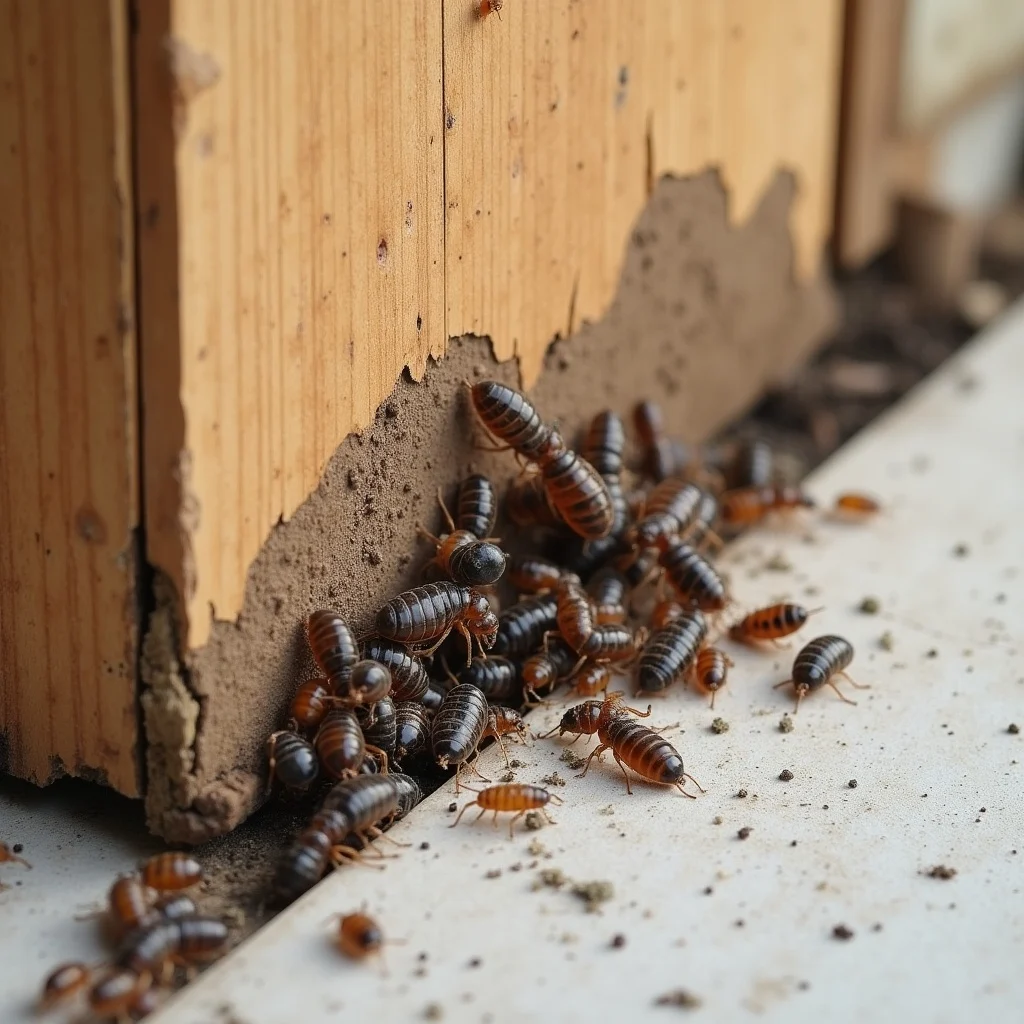
If you are seeing mud tubes on walls, hollow-sounding timber, or swarmers around the property, request a site visit. We will confirm the species, locate the active routes, and recommend whether baiting alone, soil treatment alone, or a combined program is the right fit for your property.
Best fit
Active termite pressure around existing structures with accessible perimeter zones.
Monitoring-led
Station checks help track progress and reveal activity changes over time.
Low disruption
Less intrusive than full-scale drilling in many property layouts.
Long-term control
Can be maintained as an ongoing prevention and early-detection layer.
How this service works
- Inspect perimeter and map termite activity points.
- Install stations in strategic routes.
- Introduce treatment bait after feeding confirmation.
- Run scheduled station checks and replenish when needed.
Related pages
Continue to the most relevant next page for service details, location coverage, pricing, and FAQs.
Frequently asked questions
How long does a termite baiting system take to eliminate a colony?
Colony elimination with a baiting system typically takes 3 to 6 months from the first confirmed feeding. Visible activity usually drops within the first 4 to 8 weeks, but the bait must reach the queen and supporting castes to fully eliminate the colony.
Is baiting as effective as soil treatment?
Baiting and soil treatment are different tools. Baiting targets the colony at the source and is best for long-term control. Soil treatment creates a chemical barrier around the structure and is best for fast knockdown of active entry points. For most active infestations, a combined program works better than either method alone.
How often are bait stations monitored?
During the active treatment phase, stations are checked monthly. Once feeding is no longer detected, monitoring drops to quarterly. For high-risk properties, annual monitoring continues indefinitely as an early-warning system.
Do you install in-ground or above-ground stations?
Both. In-ground stations are placed around the perimeter at 2 to 3 metre intervals. Above-ground stations are fitted directly into confirmed mud tubes on walls, beams, or other surfaces. The exact mix depends on the infestation pattern and construction type.
What type of bait do you use?
We use chitin-synthesis-inhibiting baits that disrupt the termite moulting cycle. Termites that feed on the bait cannot complete their next moult and die. The bait is designed to be carried back to the colony and shared through trophallaxis, which is what makes colony elimination possible.
Next step
Tell us your property type and pest issue. We will recommend the most suitable treatment route and timeline.