
Service Overview
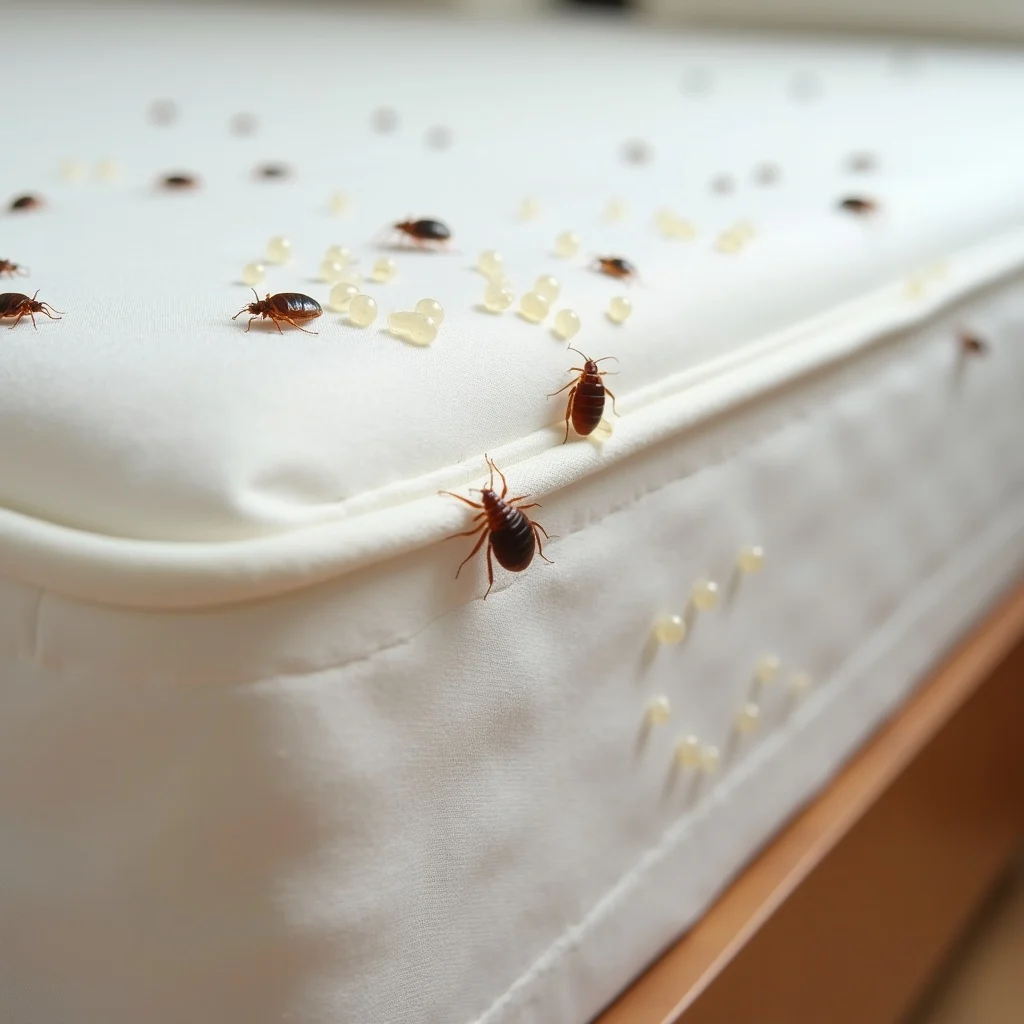
The reliable signs of bed bugs are physical, not medical. Live insects, cast skins left behind as they grow, dark blood-spotted faeces on the bedding, and shed egg cases in the seams are evidence. A bite pattern on skin is a symptom, and several other things produce exactly the same marks. Because the insects themselves hide in the seams and joints of the bed, the fastest way to confirm an infestation is to look where they actually are, rather than to keep looking at the skin.
This is why identification matters commercially as well as practically. Treating on the assumption of bed bugs when the cause is something else costs money and leaves the real problem in place, and a confirmed case can be scoped accurately from the first visit.
Physical evidence
Live insects, cast skins, blood-spotted faeces on the mattress sheet or bed frame, and shed egg cases in the seams. Any one of these confirms the presence of bed bugs.
Where to look first
Mattress seams and piping, the headboard, the joints of the bed frame, the gap between the frame and the wall, and the skirting around the bed.
What else causes similar bites
Mosquito bites, flea bites, dust mite reactions, contact dermatitis and insect bites generally all produce itchy red marks. Without finding the insect or its physical evidence, a bite pattern alone cannot identify bed bugs.
Why it matters
Identifying correctly means the right treatment. Treating the wrong pest wastes money, and it leaves the actual problem in place while the bites continue.
The physical signs, one by one
Each of these is evidence on its own. Bites are not.
- Live insects — a small, flat, reddish-brown insect roughly the size of an apple seed, with a broad flattened body. A nymph is smaller and paler.
- Cast skins — the pale, translucent shell an insect leaves behind when it grows. A cluster of them on a mattress sheet is a strong sign.
- Dark spotting — dried blood in the insect's faeces, appearing as small dark smears or dots on the sheet, the pillowcase or the bed frame.
- Shed egg cases — small, pale, translucent egg casings, often stuck along a mattress seam or inside a frame joint.
- Bite marks on skin — small, raised, itchy welts, often in a line or a cluster on exposed skin. This is the least reliable sign, because other bites look the same.
- Seam damage — small dark spots or punctures where an insect has fed, sometimes on the fabric itself.
Where in the room to inspect
The bed is the starting point, but not the only place worth looking.
- The mattress seam running along the edge, the piping, and the handles at each end — the highest-contact areas.
- The headboard and the panel behind the bed, including the gap between the bed and the wall.
- The joints and slats of the bed frame, and the area where the frame meets the headboard.
- The skirting boards, floor edges and cracks within about a metre of the bed, where insects travel between rooms.
- The bedside table, the lamp and the alarm clock — anything kept close to the bed.
- Any second sleeping surface in the room, such as a sofa or a spare mattress, because the activity is often split between them.
Collecting evidence that survives review
A sample that arrives damaged or that was cleaned away beforehand is much harder to work from, so it is worth a few minutes of care.
- Photograph the seam, the frame joint and the sign itself, with the location visible so the technician knows where it was found.
- Place a suspect insect in a sealed container, or tape it inside a clear zip bag. A loose insect on the bed is hard to identify once it has moved.
- Keep the bedding as it is. Washing or vacuuming before the inspection removes the evidence that confirms the case.
- Note where and when each bite appeared, and whether anyone in the household has been away recently — travel is the most common route of introduction.
- Take a photograph of the bite pattern only as a secondary record. It supports the account, but it does not identify the pest.
- Bring the samples to the technician rather than leaving them where staff cannot see them.
Coverage, service limits and what identification does not include
What an inspection can and cannot establish is set out before the visit, so the expectations are the same on every call.
- Coverage runs across Kuala Lumpur, Selangor and Putrajaya, with teams positioned for bed bug work.
- Identification is confirmed on site. A photograph alone is not treated as confirmation, because look-alike insects and look-alike marks are common.
- The inspection covers the sleeping areas that are mapped. Rooms used only occasionally — a spare room, or a study with a daybed — need to be mentioned at the inspection, because that is where a second harbourage often sits.
- Skin reactions are not diagnosed on site. If bites are persistent or the skin is broken, that is a matter for a doctor, and it also changes how the case is read.
- Re-attendance applies where a treated issue persists within the agreed follow-up period. Reinfestation introduced after treatment from luggage, clothing or second-hand furniture is a new case, and it is treated as one rather than as a treatment that did not work.
- Every product used is registered with the Department of Agriculture under the Pesticides Act 1974, and it is applied by licensed applicators once the identification has been confirmed rather than on the strength of a bite pattern.
How this service works
- Look where the insects hide: the mattress seams, the headboard, the frame joints and the gap behind the bed.
- Check the bedding for physical evidence: dark spotting on the sheet, cast skins, and shed eggs in the seam lines.
- Capture the evidence: photograph what you found, and keep any specimen in a sealed container or taped inside a clear bag.
- Do not move anything yet: keep bedding, clothing and luggage in the room, and keep them away from the other rooms.
- Get the identification confirmed before treating, so the scope is set from the confirmed spread.
Related pages
The links below take you straight to the material most relevant to this page.
Frequently asked questions
How do I know it is definitely bed bugs?
You need physical evidence, not a bite pattern. Look for live insects, cast skins, dark blood-spotting on the sheet, or shed egg cases in the mattress seams and frame joints. Any one of those confirms bed bugs. A bite pattern on skin cannot, because mosquitoes, fleas, dust mites and contact dermatitis produce very similar marks.
What if I only found one bug?
One live bug confirms the species, but it does not tell you how many are hidden or how far they have spread. That is what the inspection is for. Until then, keep the specimen, keep the room as it is, and do not move anything out of it.
Are the bites definitely from bed bugs?
Not necessarily. Raised, itchy welts in a line or a cluster on exposed skin are the classic description, but mosquito bites, flea bites and dust mite reactions look very similar. This is exactly why the case is confirmed by finding the insect or its traces instead of by the bites alone.
Where should I look for bed bugs in the morning?
Where they hide during the day: the mattress seams and piping, the headboard, the bed frame joints, the gap between the frame and the wall, and the skirting close to the bed. Lift the mattress edge and look along the seam line rather than only at the surface.
Do bed bugs leave anything behind on the sheets?
Yes — small dark smears and dots of dried blood where an insect has fed, pale cast skins, and shed egg cases. They are easiest to find on a light-coloured sheet, and they sit on the fabric rather than under the bed.
Will a mattress protector get rid of bed bugs?
No. A protector that goes on over an infested mattress traps the insects inside rather than removing them. Encapsulation is useful as a prevention step, and as part of a programme that has already treated the harbourage — it works best once the treatment is done and the mattress can stay sealed.
Do I need to treat the whole unit if only one bed is affected?
Not always, but the rooms next door need to be checked. Bed bugs travel along walls and through services, and an adjacent room is often where the second harbourage is. The inspection maps which rooms are affected, and the scope is set from that rather than from the room where the first insect was found.
What if a technician finds nothing but the bites continue?
That points to a different cause rather than a failed treatment. Skin reactions that persist without any physical evidence of bed bugs are usually something else, and the next step is a medical opinion on the skin, since nobody is treating an identified pest when none has been found.
Sources
Next step
Tell us your property type and pest issue. We will recommend the most suitable treatment route and timeline.