
What to know
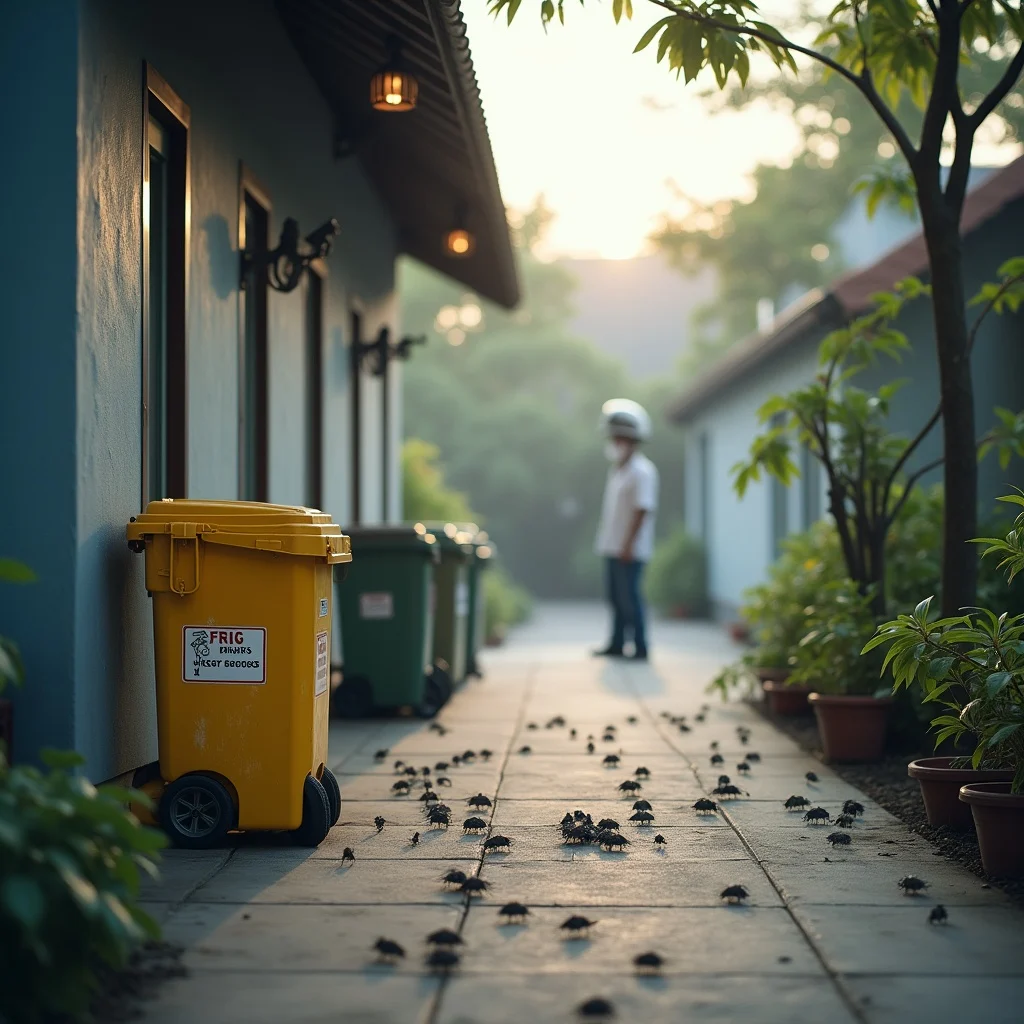
Flies in Malaysian commercial kitchens and food-handling facilities are more than a nuisance — they are a direct food safety hazard. House flies and blow flies can carry bacteria including E. coli, Salmonella, and Staphylococcus aureus from waste, decaying matter, and animal material directly onto food preparation surfaces.
Effective commercial fly control in Malaysia combines source elimination at waste and drainage points, physical exclusion through screens and air curtains, and targeted insecticide application at known resting zones. A single treatment approach rarely solves an ongoing fly problem.
Source elimination at waste points
Flies breed in decaying organic waste. We identify and treat waste storage areas, bin surrounds, and drain inlets where organic matter accumulates.
Drain and grease trap treatment
Kitchens with heavy cooking activity generate grease and food particles that build up in drains. We apply biological or chemical treatments that break down organic accumulations where flies breed.
Physical exclusion measures
We recommend and install fly screens, air curtain positioning, and door sweep seals to reduce fly entry into food preparation and storage areas.
UV light trap placement
Strategically placed UV fly traps in kitchen back-of-house areas reduce flying insect populations without using insecticides near food prep zones.
Monitoring and documentation
Our commercial programs include service logs with fly activity counts before and after treatment — useful for food safety audits and council inspections.
Seasonal peak management
Fly pressure in Malaysia increases during hot months when organic decomposition accelerates. We schedule intensified treatment cycles during these periods for commercial clients.
Practical action plan
- Inspect all waste storage areas, drain inlets, grease traps, and food preparation zones to identify breeding and resting sites.
- Apply targeted larvicide or residual insecticide treatment to each identified source point.
- Install or assess the condition of physical exclusion measures — screens, air curtains, door seals.
- Position UV fly traps in back-of-house areas away from food prep surfaces.
- Provide a written source-reduction report with actionable housekeeping recommendations for kitchen staff.
- Schedule monthly or bi-monthly service visits with documentation for food safety compliance.
Related pages
Use these links to move from answers to service options, local coverage, and pricing details.
Related articles
Frequently asked questions
How much does commercial fly control cost in Malaysia?
Commercial fly control programs in Malaysia are priced based on the size of the facility, number of treatment points, and service frequency. Small restaurants typically start from RM 350 per visit, with volume discounts available for monthly contracts.
What types of flies are most common in Malaysian restaurants?
The most common flies encountered in Malaysian food premises are house flies (Musca domestica), which breed in decaying organic waste, and blow flies (Calliphoridae family), which are attracted to meat and protein waste. Each species requires slightly different breeding-site treatment.
Can flies cause food poisoning?
Yes. Flies can carry over 100 pathogens including E. coli, Salmonella, and hepatitis A on their body surfaces and in their gut. When flies land on food or food prep surfaces, these organisms can be transferred directly to food that will be consumed.
How do I prevent flies in my restaurant kitchen?
The most effective prevention is source control: keep all waste in sealed bins and remove it daily, clean grease traps regularly, fix any blocked or slow drains immediately, install fly screens on all exterior openings, and use air curtains at doorways. Combine this with regular professional treatment for best results.
Do you provide documentation for food premises licensing?
Yes. All our commercial fly control programs include written service reports with date, treatment areas, products used, and technician details. These are formatted to support food safety audit submissions and local council licensing requirements in KL and Selangor.
Need a site-specific answer?
The right solution depends on your property type, infestation pattern, and location. Uni Smart Pest Control can recommend a practical treatment route.