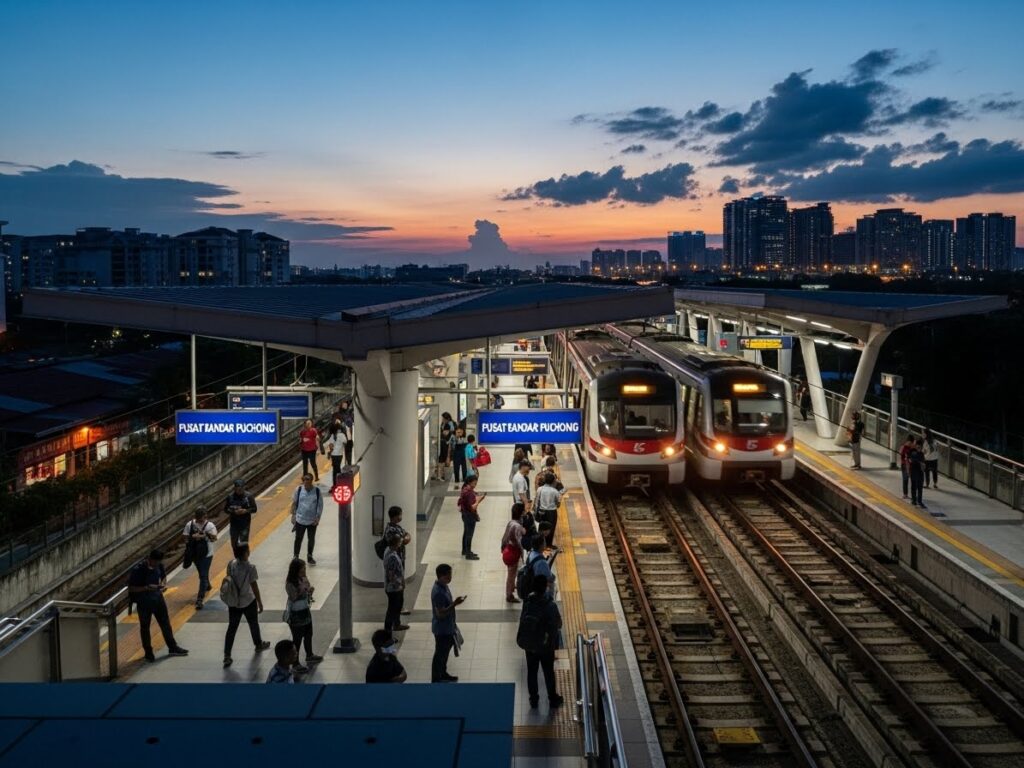
High-traffic transit hubs are the beating hearts of urban life, and Pusat Bandar Puchong LRT stands as a perfect example of this daily rhythm. Thousands of commuters pass through its platforms, escalators, and waiting areas every single day, creating an environment that faces unique challenges. Among these challenges, pest management often goes unnoticed by passengers but remains a critical priority for facility managers. Weekly pest monitoring isn’t just a precautionary measure here—it’s an essential practice that keeps the station safe, clean, and welcoming for everyone who depends on it.
Reason 1: Constant Food Waste at Pusat Bandar Puchong LRT Attracts Pests Quickly
Every day, Pusat Bandar Puchong LRT becomes a crossroads where people grab breakfast on the go, finish snacks while waiting, or discard food packaging between connections. This constant stream of food waste creates an all-you-can-eat buffet for pests. Even with diligent cleaning crews, crumbs fall between platform tiles, sugar from spilled drinks sticks to escalator steps, and food wrappers wedge into tight spaces.
Rodents can detect these food sources from impressive distances. A single discarded pastry crumb provides enough sustenance to keep a cockroach alive for days. Weekly monitoring allows pest control teams to identify problem areas before they become infestations. They can spot the early signs—gnaw marks on waste bins, droppings near food courts, or ant trails along walls—and take immediate action. Without this regular surveillance, what starts as a few scavenging pests can explode into a full-blown colony living within the station’s infrastructure, making eradication far more difficult and disruptive.
Reason 2: Complex Structure of Pusat Bandar Puchong LRT Creates Perfect Pest Hideouts
Modern transit stations like Pusat Bandar Puchong LRT are marvels of engineering, but their complexity creates countless hiding spots for unwanted guests. False ceilings conceal ductwork where rodents nest. Electrical conduits running between walls offer cockroaches dark, warm pathways. Drainage systems beneath platforms provide moisture that pests need to survive. These areas are rarely accessed during daily cleaning routines.
Weekly pest monitoring brings specialized expertise to probe these hidden zones. Technicians use inspection cameras to peer into voids, place monitoring stations in strategic locations, and track pest movement patterns through the station’s skeleton. They understand that a rat spotted on the concourse level likely has a nest somewhere in the substructure, and finding that nest requires systematic, regular investigation. This structural complexity means that waiting for pests to appear in public areas is already too late—by then, they’ve established secure territories out of sight.
Reason 3: Malaysia’s Tropical Climate Makes Pusat Bandar Puchong LRT a Year-Round Pest Haven
Kuala Lumpur’s hot, humid climate never takes a break, and neither do pests. Unlike temperate regions where cold winters naturally suppress pest populations, Malaysia’s consistent warmth allows cockroaches, rodents, and ants to breed continuously throughout the year. Pusat Bandar Puchong LRT, with its air-conditioned interiors creating cool refuges and its underground sections maintaining stable temperatures, offers pests an ideal environment regardless of outside weather.
Weekly monitoring accounts for this relentless breeding cycle. Pest control professionals track population fluctuations, identify seasonal patterns in pest behavior, and adjust treatment strategies accordingly. They know that a small problem discovered on Monday can become a major issue by Friday in this climate. Regular inspections also catch moisture problems—leaking pipes or condensation buildup—that tropical pests exploit. Without weekly checks, the station would be fighting a losing battle against creatures that reproduce faster than monthly or quarterly treatments can control.
Reason 4: Health Regulations Demand Rigorous Pest Control at Pusat Bandar Puchong LRT
Public transportation facilities operate under strict health and safety standards, and for good reason. A pest infestation at Pusat Bandar Puchong LRT isn’t just unpleasant—it’s a public health risk. Rodents spread leptospirosis and salmonella through their urine and droppings. Cockroaches trigger asthma attacks and carry bacteria like E. coli on their bodies. These health hazards in a confined space where thousands breathe the same air and touch the same surfaces create serious liability concerns.
Weekly pest monitoring demonstrates due diligence and regulatory compliance. It provides documented evidence that the facility proactively manages pest risks, which proves essential during health inspections or if a passenger complaint arises. More importantly, it prevents the kind of outbreak that could force temporary station closure for fumigation—an operational nightmare that disrupts commutes and damages public trust. Regular monitoring reports create a paper trail showing consistent effort, protecting both the transit authority and the traveling public from preventable health crises.
Reason 5: Passenger Experience at Pusat Bandar Puchong LRT Depends on Pest-Free Environments
Nobody wants to start their workday by spotting a rat on the train platform or ending it by brushing cockroaches off a bench. The commuter experience at Pusat Bandar Puchong LRT directly impacts how people perceive public transportation overall. A clean, pest-free environment signals professionalism, safety, and respect for passengers. Conversely, visible pests suggest neglect and can drive commuters toward less sustainable transportation options.
Weekly monitoring maintains this invisible shield of confidence. It ensures that the station remains a space where families feel safe letting children sit on floors, where professionals can eat a quick snack without worry, and where tourists form positive impressions of Kuala Lumpur’s infrastructure. Pest control teams work discreetly during off-peak hours, checking bait stations, sealing entry points, and removing nests before Monday morning rush hour begins. This consistency preserves the station’s reputation as a reliable, pleasant transit point rather than a place to endure.
Pusat Bandar Puchong LRT represents more than just a transit stop—it’s a vital community asset that serves as Puchong’s gateway to the greater Klang Valley. The five reasons outlined above show why weekly pest monitoring isn’t an optional expense but a fundamental operational necessity. From managing the endless supply of food waste to navigating the station’s architectural complexity, from adapting to Malaysia’s unforgiving climate to meeting health standards and preserving passenger trust, regular pest surveillance protects both public health and the facility’s integrity.
Facility managers who implement weekly monitoring programs invest in prevention rather than cure, saving money and avoiding disruption in the long run. For the thousands who depend on Pusat Bandar Puchong LRT daily, this invisible work makes the difference between a stressful commute and a smooth journey. In high-traffic transit hubs, pest control isn’t just about eliminating creatures—it’s about maintaining the quality of urban life itself.