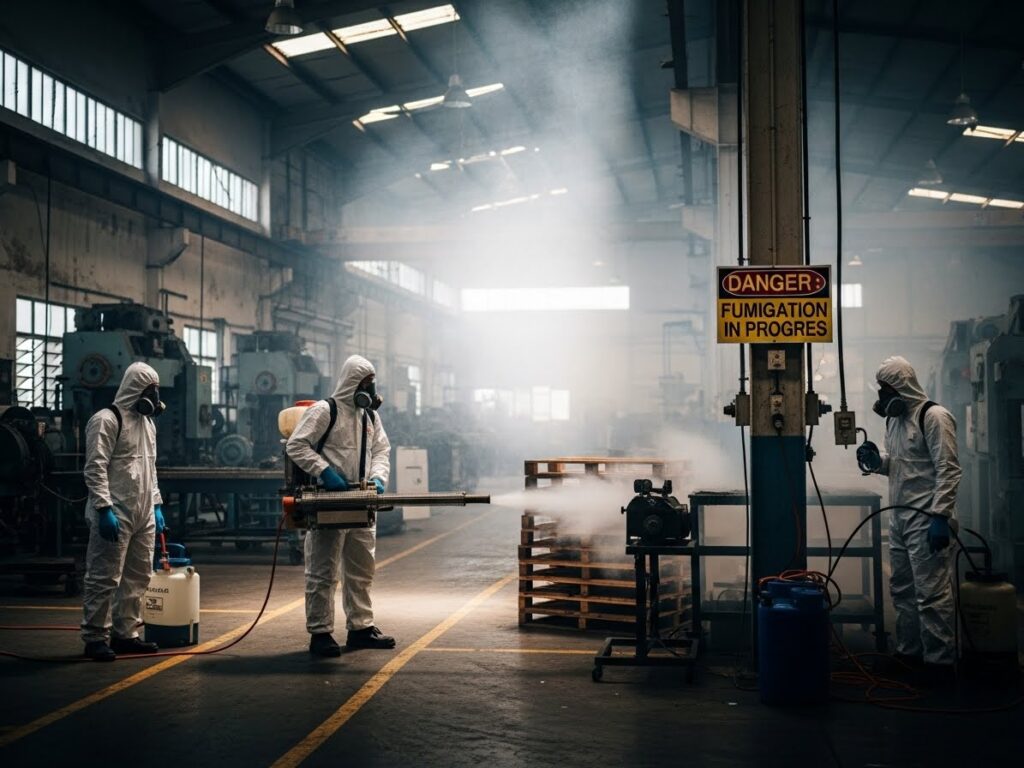
Operating a business in Puchong requires a keen understanding of local regulations and industrial standards. As one of the most developed industrial and commercial hubs in Selangor, Puchong is home to a vast array of sectors ranging from manufacturing to international logistics. For many of these businesses, maintaining a pest-free environment is not just a matter of hygiene but a legal mandate. This is where licensed fumigation services become essential. Unlike standard pest control methods like baiting or spraying, fumigation is a highly controlled process that uses gaseous pesticides to eliminate pests in an enclosed space. Because of the high risks associated with the chemicals used, such as methyl bromide or phosphine, the Malaysian government has strict laws regarding who can perform these services and which industries must use them.
If you are a business owner in areas like Taman Perindustrian Puchong, Bandar Puteri, or Puchong Utama, understanding these requirements can save you from heavy fines, shipment rejections, or even the forced closure of your premises. Here is a detailed look at the five industries in Puchong that are legally required to utilize licensed fumigation services to stay compliant and operational.
Logistics and International Shipping: Export Fumigation
Puchong serves as a primary transit point for goods moving toward Port Klang. Any company involved in the export of goods, especially those using wooden packaging materials, must adhere to international phytosanitary standards. The International Standards for Phytosanitary Measures No. 15, commonly known as ISPM 15, is a global regulation that requires all wood packaging materials like pallets, crates, and dunnage to be treated to prevent the spread of timber pests across borders.
For a logistics firm in Puchong, fumigation is the primary method used to meet these standards. If a shipment arrives at an international port without a valid certificate of fumigation from a licensed provider, the consequences are severe. The entire cargo can be quarantined, sent back to Malaysia at the exporters expense, or even destroyed. This regulation exists to prevent invasive species like the Asian longhorned beetle from hitchhiking in wooden crates and devastating foreign ecosystems. In Malaysia, only service providers registered under the Malaysian Fumigation Accreditation Scheme can issue the necessary documentation that customs officials require. Therefore, for the logistics sector in Puchong, fumigation is a vital part of the supply chain that ensures legal passage into global markets.
Food Manufacturing and Large Scale Storage: Silo Fumigation
The food industry in Puchong is massive, encompassing everything from small central kitchens to large-scale manufacturing plants that produce flour, snacks, and dried goods. These facilities are governed by the Food Act 1983 and the Food Hygiene Regulations 2009. These laws stipulate that all food premises must be kept free from any condition that might lead to contamination. When it comes to large quantities of stored raw materials like grains, rice, or spices, traditional pest control is often insufficient.
Stored product insects such as weevils, moths, and beetles can penetrate deep into bags and silos where surface sprays cannot reach. To combat this, food manufacturers in Puchong must employ licensed fumigation to treat their storage areas. This process ensures that every life stage of the pest, from eggs to adults, is neutralized without leaving harmful chemical residues on the food products when done correctly by a professional. Health inspectors from the Ministry of Health frequently audit these facilities. If an infestation is found and there is no record of professional fumigation being conducted, the facility can be shut down immediately to protect public health. This makes fumigation an indispensable legal safeguard for the food manufacturing sector.
Timber and Wood Based Manufacturing: Structural Fumigation
Puchong has a long history with the timber and furniture industry, with many showrooms and manufacturing centers still active in the region. Because wood is a natural material, it is highly susceptible to wood-boring insects and drywood termites. For businesses that manufacture high-quality timber products for export or local sale, fumigation is often a contractual and legal requirement.
In many cases, timber must undergo fumigation before it is even processed to ensure that the core of the wood is free from larvae that could emerge years later. Furthermore, if a commercial building or a large furniture warehouse in Puchong suffers from a widespread termite infestation that threatens the structural integrity of the property, the local authorities may require a full structural fumigation. This involves wrapping the entire building in a gas-tight tent to ensure the fumigant reaches deep into the wooden beams and foundations. Because this process involves high concentrations of gas, it is strictly regulated by the Department of Agriculture, and only licensed professionals are permitted to handle the equipment and chemicals involved.
Pharmaceutical and Medical Device Logistics: Sterile Fumigation
As Puchong continues to grow as a healthcare and biotechnology hub, the number of pharmaceutical warehouses and medical device distributors has increased. These industries operate under exceptionally strict standards such as Good Manufacturing Practice and various ISO certifications. Maintaining a sterile environment is not just an industry preference; it is a legal requirement enforced by the Medical Device Authority and the National Pharmaceutical Regulatory Agency.
While these facilities usually maintain high levels of cleanliness, the introduction of pests or microbes can be catastrophic for sensitive medical equipment or medication. In instances where a facility has been compromised or when a new warehouse is being prepared for high-sensitivity storage, specialized fumigation is used to achieve total decontamination. This type of fumigation is different from agricultural methods as it often focuses on eliminating microbial life as well as traditional pests. For a pharmaceutical company in Puchong, having a licensed fumigation partner is essential for passing the rigorous audits required to maintain their operating licenses.
Agriculture and Commercial Nurseries: Soil and Plant Fumigation
While much of Puchong is urbanized, the outskirts and certain zones still host significant agricultural activity, including commercial nurseries that supply plants and flowers to the wider Klang Valley. These businesses are subject to the Plant Quarantine Act 1976, which aims to prevent the movement of dangerous plant pests and diseases within Malaysia and across its borders.
Commercial nurseries in Puchong that move large volumes of plants or soil must ensure their products are free from nematodes, soil-borne fungi, and invasive weeds. Soil fumigation is a common legal requirement for these businesses before they can ship their products or even before planting new cycles of high-value crops. If a nursery is found to be a source of a pest outbreak due to a lack of proper treatment, they can face significant legal liabilities and the destruction of their stock. By using licensed fumigation services, these agricultural businesses can provide the necessary health certificates to prove their products are safe for distribution.
The Importance of Licensing in the Fumigation Process
It is important for business owners in Puchong to understand that not all pest control companies are authorized to perform fumigation. In Malaysia, a company must hold specific licenses from the Department of Agriculture to handle fumigants like methyl bromide and phosphine. These chemicals are highly toxic and, if mishandled, can be fatal to humans and damaging to the environment.
When you hire a licensed provider for fumigation in Puchong, you are ensuring that the technicians have undergone the necessary training to calculate gas concentrations, monitor leakages, and properly aerate the area after the treatment is complete. They will also provide the legal documentation, such as a certificate of fumigation, which acts as proof of compliance for government inspectors and international trade partners.
If your business falls into the logistics, food production, timber, pharmaceutical, or agricultural sectors, you must prioritize professional fumigation. The dense industrial nature of Puchong means that a pest problem in one warehouse can quickly spread to neighbors, leading to community-wide issues that draw the attention of local councils like Subang Jaya City Council. Staying ahead of these issues through regular, licensed fumigation not only keeps you on the right side of the law but also protects the reputation and longevity of your business in this competitive market.